Can commerce leaders truly eliminate transactional bottlenecks, or are we simply digitizing administrative friction? The answer lies in moving beyond manual clicks toward autonomous systems that prioritize strategic intent over interface volume.
In the early autumn of 1994, a man named Phil Brandenberger sat at his computer in Philadelphia and purchased a Sting CD for $12.48 plus shipping. It was the first ever encrypted online transaction. At that moment, the digital world believed it had reached the zenith of commerce: a human sitting at a screen, clicking a button, and triggering a sequence of manual fulfillment.
For thirty years, we have merely refined that single act of clicking. We built better screens, faster checkout buttons, and more persuasive algorithms, yet the fundamental architecture remained unchanged. The human was the engine; the interface was the bottleneck. Today, we are witnessing the beginning of a fundamental shift away from the click as the primary unit of commerce.
We are moving into an era where the human provides the intent, but a protocol-governed agent increasingly executes the transaction. This is not merely an upgrade to your e-commerce storefront: it is a gradual decoupling of commerce from a purely human-readable web. As AI agents begin to inhabit our digital ecosystems, they require a new language to negotiate, verify, and settle. They require the Agentic Commerce Protocol.
The Rise of Agentic Commerce in the AI Economy
The transition toward an autonomous economy is being driven by the convergence of advanced reasoning models and ubiquitous digital connectivity. As businesses look to eliminate the friction inherent in human-led workflows, the focus is shifting from simply providing information to enabling execution. This evolution represents a fundamental change in the digital value chain where agency is becoming a primary currency.
In this new landscape, the ability of a system to act on behalf of a user becomes a vital measure of its value, making traditional passive interfaces feel increasingly insufficient. The shift is already reflected in consumer sentiment. Current data indicates that 24% of consumers are already comfortable with AI agents shopping for them, signaling a behavioral shift as the "Next" button begins to be supplemented by the "Execute" command.
This trend is accelerating among younger demographics, where Gen Z adoption is even higher at 32%, signaling a permanent shift in how future generations will interact with the digital economy. As these agents become more sophisticated, the boundary between a suggestion and a purchase will continue to blur, making commerce a background process of the digital experience.
Why AI Agents Are Entering Commerce Workflows
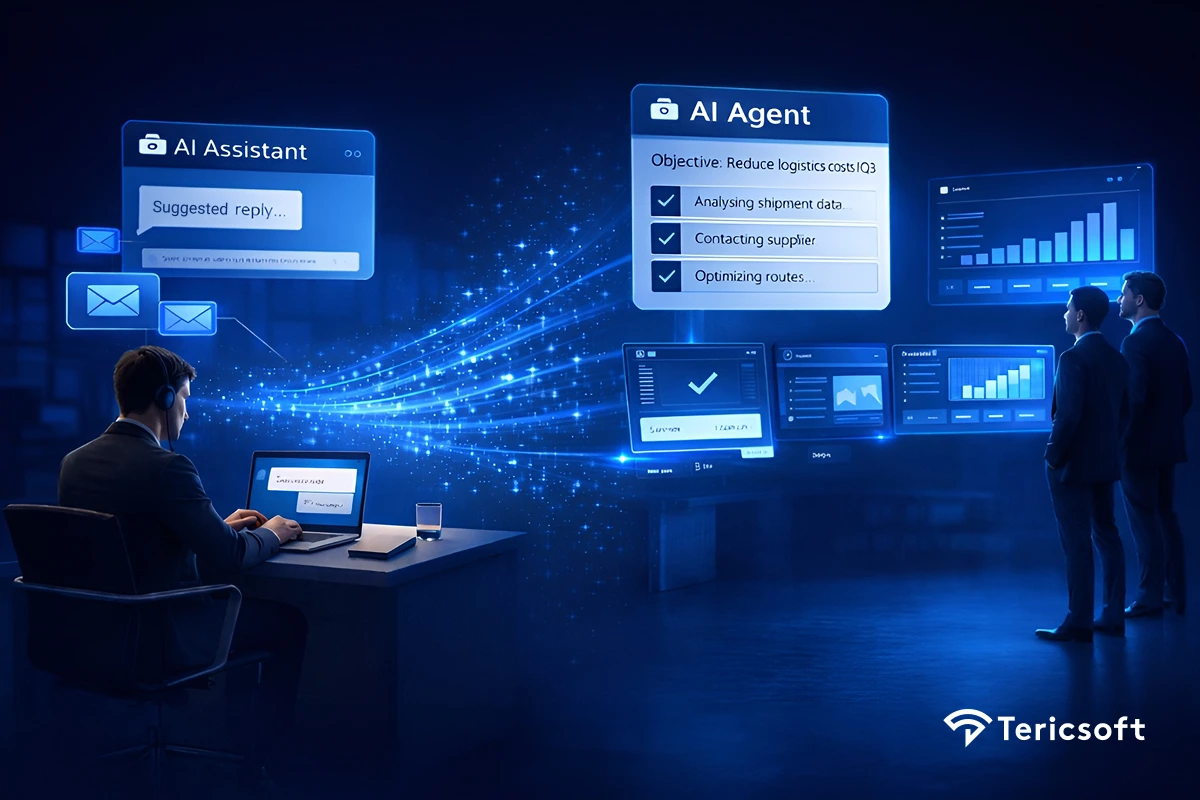
AI agents are no longer limited to the role of a chatbot or a recommendation engine. They have evolved into decision-making entities capable of managing complex logistics and financial parameters. In enterprise procurement, agents can monitor inventory levels in real time, identify a shortage, and initiate a vendor discovery process without a single manual request.
This level of autonomy requires a protocol that handles trust as effectively as it handles data. It ensures that every automated decision aligns with broader corporate strategy and budgetary constraints. As these systems scale, they move beyond simple automation and into the realm of strategic participation.
"AI is the defining technology of our generation."
— Greg Estes, Vice President of NVIDIA’s developers programs
How Commerce Is Shifting From Search to Intent
Search is a human struggle with data. Intent is an agent's alignment with business goals. In a search-based world, you find what is advertised. In an intent-based world, the protocol ensures the agent finds what is optimal. This shift moves the value capture from the top of the search results toward the bottom of the protocol stack.
The brand that wins is no longer necessarily the one with the best SEO, but the one with the most agent-accessible protocol layer. Businesses must begin to pivot from designing primarily for eyeballs to designing for machine-readable intent fulfillment. If a machine cannot verify your value proposition in milliseconds, that value proposition effectively ceases to exist for the agent.
The Catalysts: When and Why Does an Enterprise Need ACP?
The adoption of an Agentic Commerce Protocol is not merely a technological choice: it is a strategic necessity for organizations operating in high-complexity environments. While traditional e-commerce works for simple, low-velocity transactions, it often breaks down when faced with the demands of the modern autonomous economy. There are three primary triggers that signal when an enterprise should consider moving toward a protocol-based commerce architecture.
1. High-Velocity Market Volatility
When prices, stock levels, or logistical conditions change in milliseconds, human reaction time becomes a liability. Enterprises need ACP when they must react to global supply chain disruptions or sudden market surges in real time. A protocol-governed agent can re-negotiate with five different vendors simultaneously the moment a primary supplier reports a delay, ensuring business continuity. This agility allows firms to hedge against volatility in ways that were previously restricted to high-frequency trading desks.
2. Multi-Variable B2B Procurement
Traditional procurement platforms are limited to basic filters and static catalogs. ACP is required when transactions involve complex variables such as tiered pricing, delivery windows, sustainability certifications, and varying credit terms. A protocol allows an agent to weigh these factors against corporate policy and find the Pareto optimal deal that a human might miss. By automating the comparison of thousands of permutations, the protocol ensures that procurement is both compliant and economically optimized.
3. Hyper-Personalization at Scale
Enterprises selling to millions of customers cannot manually negotiate with each one. ACP is needed to enable the seller side to respond to unique buyer-agent intents. If a buyer agent requests a custom bundle of services, the seller ACP layer can dynamically price and authorize that specific transaction based on real-time margin data. This capability creates a conversion multiplier of up to 4x compared to traditional systems, fundamentally changing the economics of digital sales.
What Is an Agentic Commerce Protocol?
To understand this landscape, we must define the infrastructure that makes it possible. An Agentic Commerce Protocol is not a single software application, but a set of rules and communication standards that allow different AI systems to work together. It serves as the connective tissue for an economy where software, not people, manages a growing percentage of transactional volume.
What a Commerce Protocol Enables
An Agentic Commerce Protocol (ACP) is the foundational layer that allows autonomous agents to communicate across disparate platforms. It provides the digital handshake required to exchange intent, evaluate options, and execute transactions without human intervention. While a website is built for eyes, a protocol is built for logic.
It allows for a stateful negotiation that persists across sessions, which is something difficult to achieve in standard stateless web requests. This enables a level of sophisticated dialogue between machines that mirrors human business dealings. Through this protocol, agents gain the ability to manage complex contracts and long-term vendor relationships autonomously.
Comparison: APIs vs. Agentic Commerce Protocols vs. MCP
To understand the ACP, we must compare it to the emerging Model Context Protocol (MCP). While they share the goal of interoperability, their functions are distinct in the agentic stack.
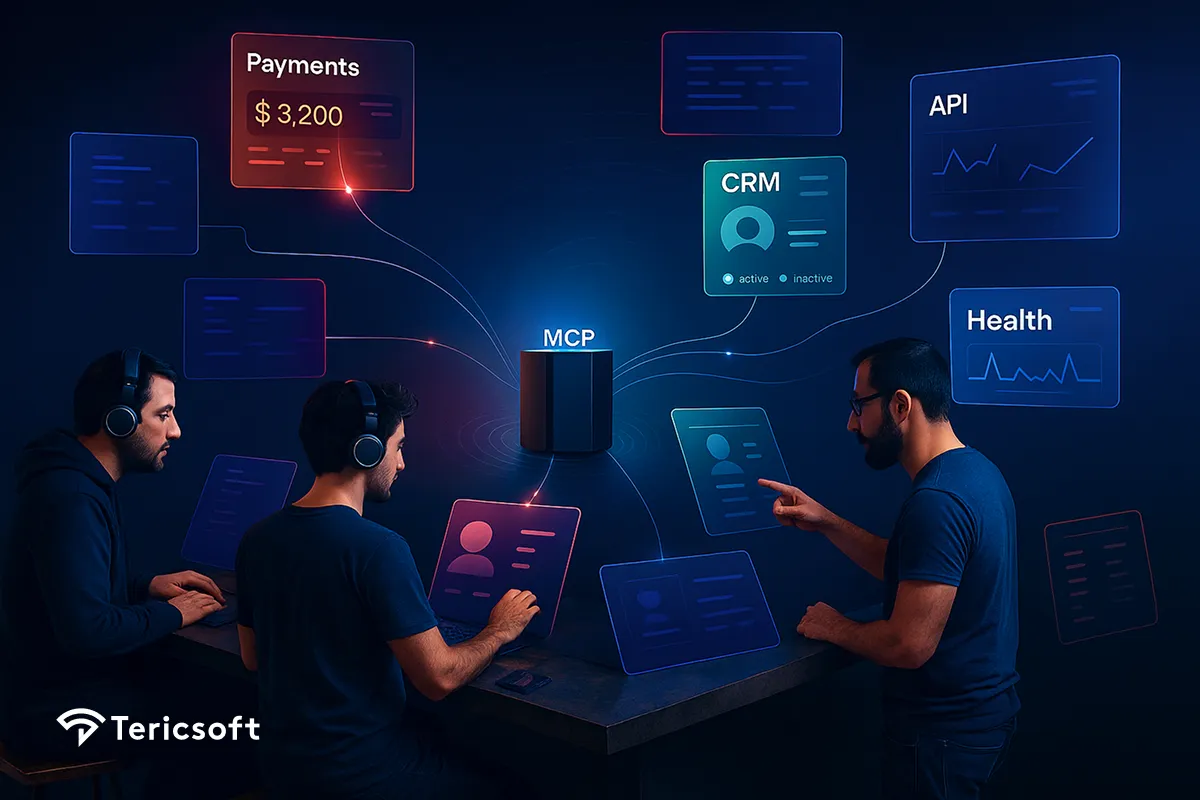
The distinction is simple: MCP helps agents understand your data; ACP gives them the authority to act on it. While MCP allows an agent to read your database or see your spreadsheet, the Agentic Commerce Protocol is what allows that agent to spend your money and sign your contracts.
.webp)
The Technical Architecture of Autonomous Exchange
Building an environment for autonomous agents requires a departure from traditional client-server models. The architecture must be resilient enough to handle high-frequency interactions while maintaining strict security standards. This requires a modular approach where each layer of the stack serves a specific role in the transactional lifecycle.
The ACP Protocol Stack
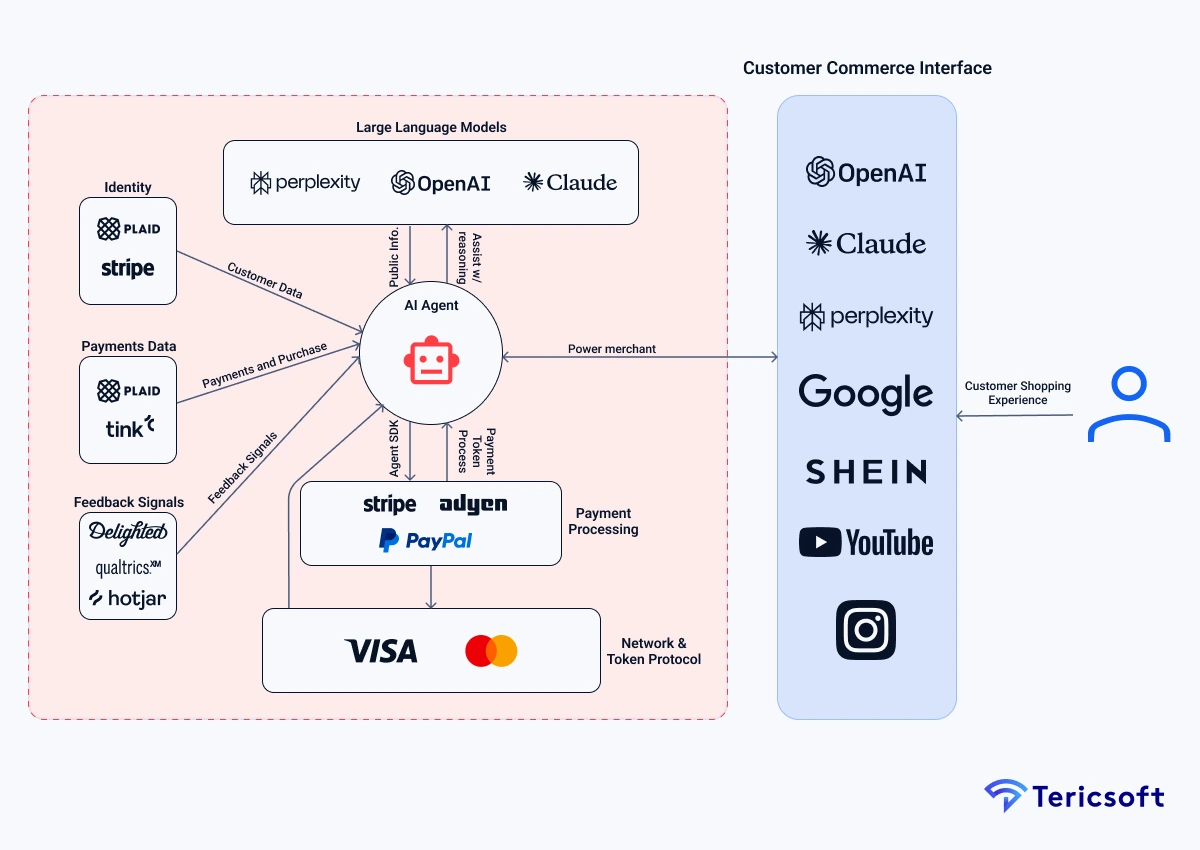
The architecture is divided into four distinct layers that work in concert:
- The Intent Layer (User Interface): This is where the LLM or agent receives high-level goals from the human. It uses the Model Context Protocol (MCP) to gather business context, such as current budget constraints from a CRM or inventory needs from an ERP.
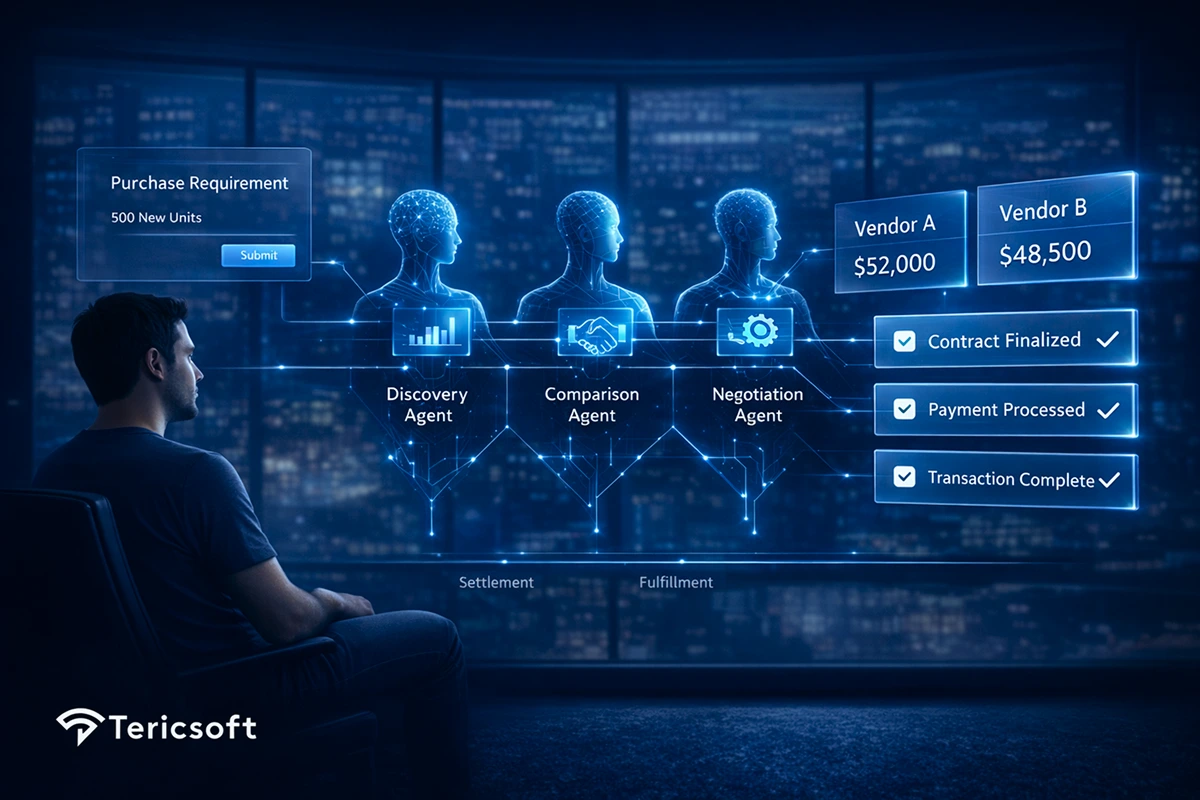
- The Negotiation Layer (Protocol Core): This layer utilizes standardized schemas to communicate with external vendors. It handles the proposal, counter-proposal, and term-optimization logic, ensuring the agent stays within the predefined delegation of authority limits.
- The Identity & Verification Layer: Using Decentralized Identifiers (DIDs) and Verifiable Credentials, this layer ensures the agent has the legal authority to bind the corporation to a contract, preventing unauthorized financial commitments.
- The Settlement & Fulfillment Layer: This layer connects to financial rails to execute the payment and triggers the physical or digital delivery, acting as a bridge between the digital negotiation and the real-world movement of goods.
Why the Internet Needs a Protocol Layer for Agentic Commerce
The current internet was designed for browsing, not for autonomous action. As agents become primary users of the web, the limitations of our existing infrastructure are becoming apparent. To unlock the full potential of AI-led commerce, we must solve the problems of fragmentation and the lack of dynamic negotiation capabilities.
Why Commerce Systems Remain Fragmented
Modern commerce is a collection of walled gardens where platforms operate on different logic and data structures. For a human, these are simply different tabs in a browser; for an AI agent, these are often insurmountable barriers. Without a unified protocol, an agent would need a custom integration for every single vendor on earth: the N x M integration problem. A protocol layer effectively standardizes this interaction, allowing an agent to traverse the web as a more cohesive marketplace.
Why Interoperability Matters
Interoperability is the difference between a tool and an economy. Without it, agentic commerce remains a niche feature restricted to a few large platforms. With it, every small business becomes agent-discoverable, leveling the playing field in the AI-driven economy. We are moving toward a future where 80% of retail executives plan to implement AI-powered automation by 2025, making interoperability a survival requirement for any enterprise wishing to participate in the next wave of digital growth.
Strategic Roadmap: How Enterprises Can Prepare for Agentic Commerce
Transitioning to an agentic model is a long-term journey that requires immediate foundational steps. Enterprises that begin preparing now will be best positioned to capture value as the protocol layer matures. The focus should be on creating a digital environment where autonomous agents can discover, evaluate, and interact with your business without friction.
- Make Product and Service Data Machine-Readable: The first step is to ensure that your catalogs, service descriptions, and technical specifications are available in high-fidelity, structured formats. This goes beyond standard SEO: it involves using schemas that AI agents can parse for deep comparison.
- Expose Pricing and Inventory in Structured Formats: Agents cannot negotiate if they cannot access real-time availability and dynamic pricing data. Moving toward API-first or protocol-ready data exposure allows agents to see the "truth" of your current supply without human intervention.
- Define Agent Authority Boundaries: Success in agentic commerce requires clear guardrails. Enterprises must define the "delegation of authority" for their own buyer agents, specifying which categories, price ranges, and vendor types an agent can autonomously approve.
- Implement Identity, Audit, and Approval Layers: Security is the bedrock of this shift. Organizations should begin implementing Decentralized Identifiers (DIDs) for their corporate agents and establishing immutable audit logs to track every negotiation and transaction for compliance purposes.
- Pilot ACP in Specific Workflows First: Rather than a total overhaul, enterprises should pilot Agentic Commerce Protocols in specific, high-friction areas such as tactical procurement or automated customer service fulfillment. This allows for the refinement of governance before scaling.
How Agentic Commerce Protocol Works in Practice
While the conceptual framework is powerful, the true value of an Agentic Commerce Protocol is revealed in its real-world application. By examining specific workflows, we can see how this infrastructure removes friction and enables a level of efficiency that was previously difficult to achieve.
AI in Procurement and Autonomous Purchasing
Consider a manufacturing plant where a procurement officer traditionally spends 40% of their time on tactical buying. With an ACP, the ERP system (like those discussed in our analysis of what is SAP) becomes agentic. The system notices a bearing is wearing out, finds a replacement via the protocol, negotiates the fastest shipping, and pays the invoice: all before the human operator starts their shift. This proactive maintenance cycle eliminates downtime and reduces human error in the supply chain.
The Conversion Multiplier
The efficiency of these systems is not theoretical; early implementations show a massive performance gap between manual and autonomous systems. Specifically, businesses have seen a 12.3% conversion rate with AI vs 3.1% without AI, representing a massive increase in commercial throughput. This is because agents do not suffer from decision fatigue or abandon carts due to poor UI: they follow the protocol to its logical completion every single time.
Enterprise Impact of Agentic Commerce Protocol
The financial upside of this transition is substantial and multifaceted. Enterprises can increase revenue by up to 40% through personalization and automated negotiation that targets individual buyer needs. This growth is driving the overall market, as the AI-powered ecommerce market is projected to reach $22.6B by 2032, reflecting the massive scale of this infrastructure shift.
Challenges in Adopting Agentic Commerce Protocol
Despite the clear advantages, the path to an increasingly agentic economy is not without its hurdles. Enterprises face significant psychological and technical barriers as they move away from human-governed interfaces. Understanding these challenges is the first step toward building a resilient strategy for adoption that prioritizes security, trust, and standardized communication.
Trust and Verification
The primary barrier to enterprise adoption is the black box problem. Organizations are inherently hesitant to grant autonomous systems a blank check, fearing that an agent might misinterpret a goal and commit to a significant financial obligation. Trust in agentic commerce is about establishing a chain of legal and operational accountability. To mitigate these risks, enterprises must implement robust governance layers and human-in-the-loop thresholds for high-value transactions. Every negotiation must generate an immutable, cryptographically signed audit log.
Security and Fraud in an Agent-First World
Autonomous systems introduce entirely new attack surfaces that traditional cybersecurity is ill-equipped to handle. Prompt injection attacks could trick a buyer agent into accepting inflated prices, or a malicious actor could deploy thousands of agents to manipulate market supply. Security must be embedded at the protocol level through multi-layer authentication, where every agent possesses a unique, verifiable identity. Anomaly detection systems must monitor Agent-to-Agent (A2A) interactions in real time to identify non-human fraudulent patterns.
The Future: The Hidden Risk of Invisibility
As we look toward the future, the primary challenge for brands will increasingly change from visibility to accessibility. In a world governed by protocols and agents, the standard rules of marketing, SEO, and brand loyalty are being fundamentally rewritten. The consumer of the future is an agent, and that agent does not care about your aesthetic choices or your taglines: it cares about your data and your protocol compliance.
The biggest risk to your business is not just losing customers: it is becoming increasingly invisible to agents. If your inventory, pricing, and capabilities are not exposed via a protocol that an agent can parse and negotiate with, you risk becoming sidelined in the autonomous economy. Brands must ensure their digital presence is agent-ready or risk being bypassed by the systems that will eventually manage a large portion of the world's transactional volume.
"AI will automate the whole economy."
— Sam Altman, CEO of OpenAI
How We Enable Agentic Commerce Protocol for Enterprises
Navigating the shift to agentic commerce requires a partner who understands both the legacy infrastructure and the future of autonomous systems. Transitioning to this future requires an architectural overhaul that touches every part of the business. At Tericsoft, we specialize in building the bridge between legacy systems and AI agents, ensuring your enterprise is ready for the agentic age.
We help enterprises:
- Develop AI-Native Infrastructure: Ensuring your data is agent-readable and protocol-compliant for seamless interaction.
- Design Interoperable Protocols: Building custom negotiation and transaction layers that connect your business to the wider agentic economy.
- Embed Governance: Creating the safety rails and audit trails that allow you to trust your agents with your balance sheet.
The question for enterprise leaders is no longer if agents will buy on your behalf, but how prepared your infrastructure is to handle the first digital handshake.

An Agentic Commerce Protocol is a standardized framework that enables AI agents to autonomously discover, negotiate, and execute transactions.
AI agents analyze intent, compare options across vendors, negotiate terms, and complete transactions without human intervention.
Traditional eCommerce relies on human actions like searching and clicking, while agentic commerce is driven by AI agents executing tasks based on intent.
Enterprises need it to handle complex, high-speed transactions, automate procurement, and enable real-time decision-making at scale.
Key challenges include trust, security, governance, and ensuring interoperability between different systems and agents.