Can AI fix the driver shortage that caps fleet growth? See how AI voice agents answer, screen, and onboard drivers around the clock, before rivals call.
Ask any large fleet operator in India what caps growth, and the answer is rarely vehicles, contracts, or capital. It is drivers. A vehicle without a driver is operationally identical to a breakdown: fully costed, earning nothing.
The scale of the gap is national. India is short by roughly 2.2 million drivers, and for every 100 trucks there are now about 55 drivers, down from 75 a few years ago Business Standard, 2025.
This is where AI driver recruitment changes the equation. It uses AI voice agents to answer recruitment calls instantly, run outbound campaigns, screen candidates in minutes, and carry them through onboarding to a first trip. It does not replace your recruiters. It removes the delay that loses you drivers. This post explains how it works and why speed, not headcount, decides who fills the seat.
“India faces a shortage of about 22 lakh drivers.”
— Nitin Gadkari, Union Minister for Road Transport and Highways (Business Standard, 2025)
Driver Hiring Is a Speed Problem Wearing an HR Costume
Fleet operators tend to treat driver hiring as an HR process: collect applications, schedule screening calls, verify documents, onboard. Drivers do not behave like office candidates.
They decide in days, often hours. They apply to several operators at once. They respond to phone calls, not emails. The operator who speaks to the candidate first, and moves them to a yes fastest, wins the driver. Everything else is commentary.
Problem 1: Campaign Calls Arrive in Spikes No Human Team Can Answer
A recruitment campaign, whether a radio spot, a referral push, or a banner at a transport hub, does not generate a tidy queue. It generates a spike: hundreds of calls in the hours after it airs, then a trickle.
Staff a call team for the spike and they idle the rest of the month. Staff for the average and the spike rings unanswered, which means the campaign budget bought you busy signals.
An AI voice agent dissolves the trade-off. Every call is answered on the first ring, in the caller's language, at any hour, whether ten candidates call or a thousand. The campaign that used to convert whoever got through now converts whoever calls.
Problem 2: Screening by Human Callback Loses the Best Candidates
In the conventional funnel, an application waits for a recruiter's callback, typically a day or more. The screening itself is a checklist conversation: license class and validity, experience, vehicle types, location, shift availability, salary expectations.
Nothing in that conversation requires a human. Everything about its delay costs you candidates, and the best ones, the experienced and in-demand drivers, are precisely the ones gone soonest.
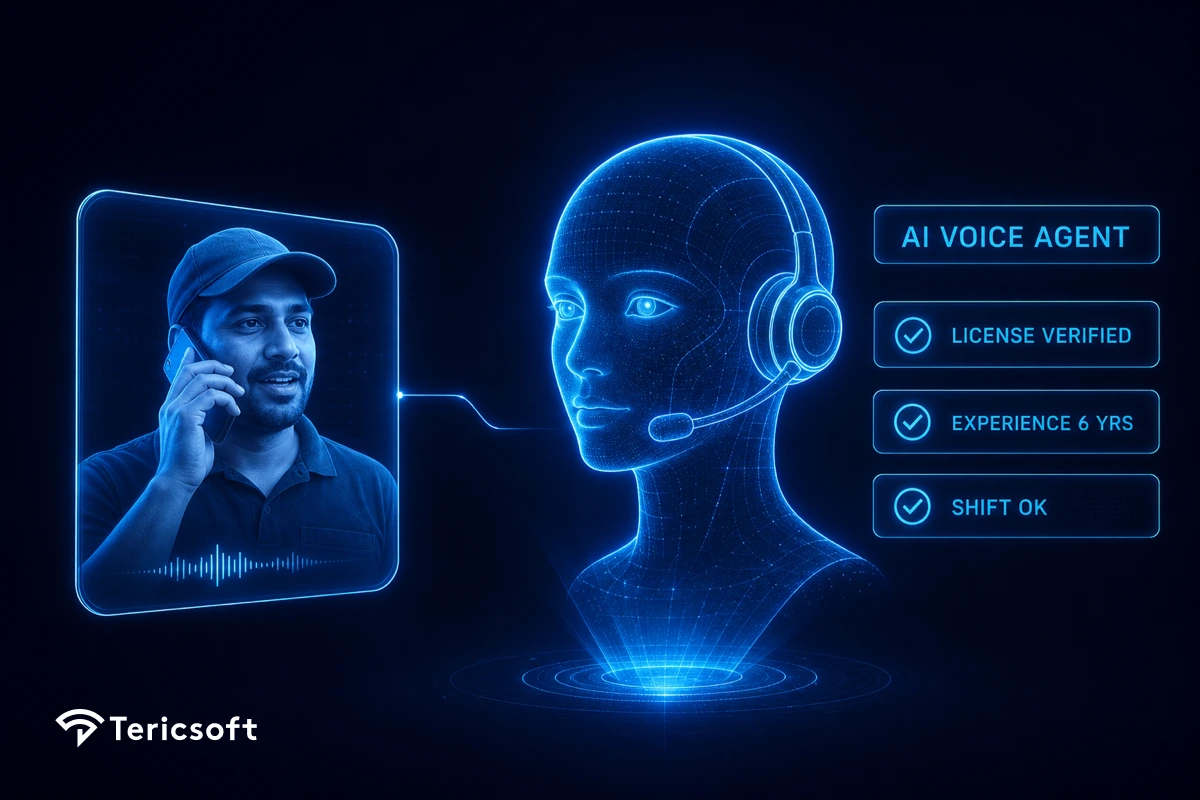
The AI agent screens within minutes of contact. It runs the qualification conversation, collects document details, flags exceptions for human review, and books qualified candidates directly into the next interview or verification slot. It also works outbound: past applicants, lapsed drivers, and referral lists get a call the moment a matching seat opens, turning a dead applicant database into a live supply channel.
Problem 3: Hired Is Not Driving, and Onboarding Is Where Hires Leak
Operators celebrate offer acceptance, but the funnel's last leak sits between yes and first trip: documents pending, police verification stalled, a training session missed. The candidate, who needs income this week, quietly starts driving for someone else.
Most operators do not even measure this stage. They experience it as "we hired 40 and 28 showed up."
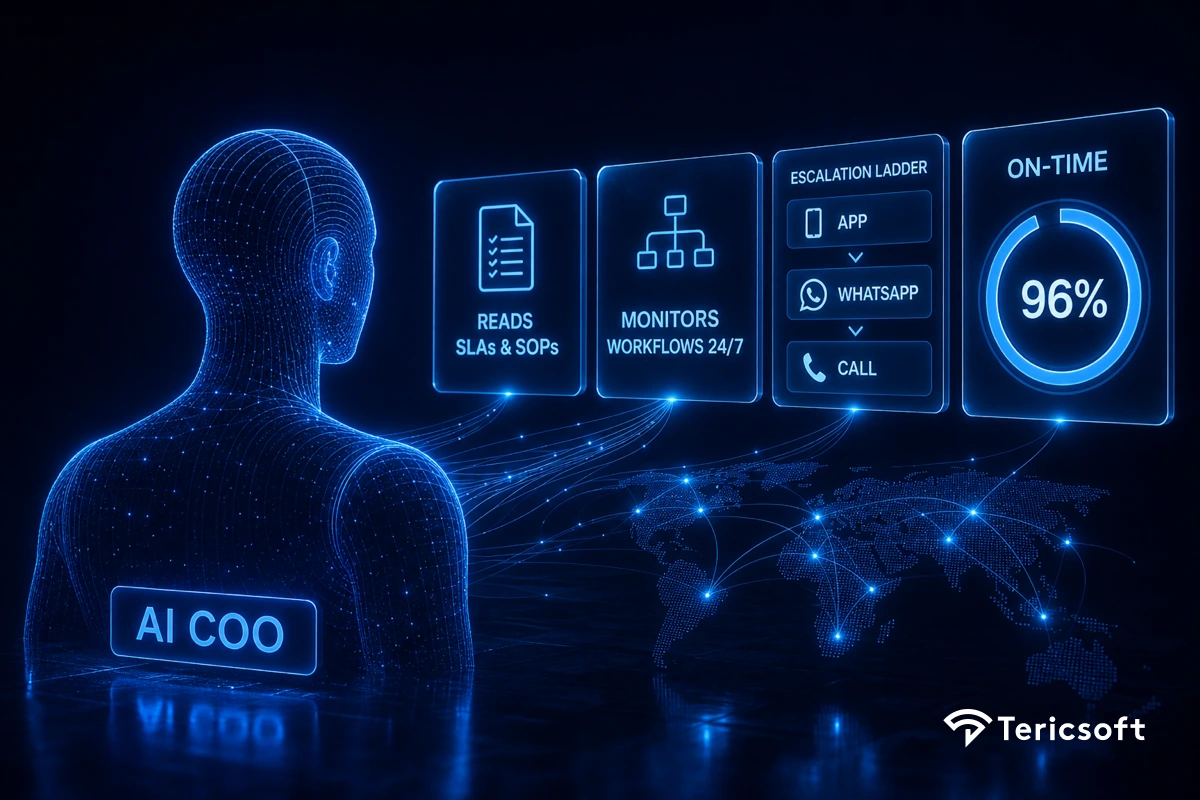
The same agent that screened the candidate nudges them through every onboarding milestone by call and WhatsApp, and escalates stalled candidates to the recruitment team the way our AI operations agent escalates an SLA breach. The right person hears about it while it is still fixable.
AI and Recruitment: The End-to-End Solution Stack
Bringing AI and recruitment together for drivers is not a single feature. It is a connected stack, each layer closing a specific leak.
- Inbound AI calling. Campaign hotlines answered instantly, 24/7, multilingual, with the qualification conversation completed on the first call
- Outbound AI campaigns. Opted-in candidate pools called at scale when seats open, re-engaging past applicants and lapsed drivers
- Automated screening and verification. License, experience, and document collection structured into the conversation, exceptions routed to humans, qualified candidates auto-scheduled
- Onboarding milestone tracking. Proactive nudges through verification, training, and first trip, with stalled candidates escalated before they are lost
- Funnel analytics. Cost per qualified candidate by campaign and channel, drop-off by stage, time-to-first-trip, so recruitment is finally measured like the operations process it is
The AI Voice Agent for Driver Recruitment
The engine of the stack is the AI voice agent for recruitment. It speaks the candidate's language, holds a natural screening conversation, and records every answer.
This is not a speculative pattern for us. Tericsoft's voice AI runs recruitment-style calling in production in healthcare staffing, where it saves one client 100+ hours of manual calling weekly while filling shifts 30% faster. Driver recruitment is the same problem with a steering wheel: high-volume, phone-native, and decided by speed. See more AI voice agents in operational settings.
Driver Recruitment Software vs an AI Calling Layer
Most operators already own an applicant tracker. Driver recruitment software stores and organises candidates well. It does not place the call, hold the conversation, or chase the stalled document at 9 p.m.
That gap is the point. The tracker records the funnel. The AI calling layer moves candidates through it. One is a filing cabinet. The other is the recruiter that never sleeps.
Where Recruitment Automation Actually Moves the Number
Recruitment automation earns its place at two moments: the instant a candidate raises their hand, and every moment a hire sits stalled before their first trip.
Adoption is already moving in this direction. A majority of recruiters now apply AI to screening and candidate nurturing LinkedIn Future of Recruiting. The operators who win drivers will be the ones who automate the chase, not the judgment.
What It Is Worth
The headline numbers are simple. Instant answering can roughly double the qualified pipeline from the same campaign spend. Speed to first conversation drops from a day to minutes. And a comparable staffing deployment saved 100+ hours of calling weekly while filling roles 30% faster.
Run your own numbers on three lines. The arithmetic is what makes this urgent.
- Campaign yield. If unanswered spike-hour calls are 30 to 50% of responses, instant answering can nearly double the qualified pipeline from the same spend
- Speed to first conversation. Collapsing it from a day to minutes moves you to the front of every candidate's mental queue, the slot where offers get accepted
- Idle-vehicle days. Every week cut from time-to-first-trip is a week of revenue per seat. At 500+ vehicles with normal churn, that compounds into a fleet-sized difference over a year
Why this matters beyond driver hiring: Any high-volume, phone-native hiring problem behaves the same way: security guards, delivery riders, field staff, healthcare shifts. The agent changes; the speed advantage does not.
Key Lessons
- Speed to first call decides hiring win rate. Driver recruitment is won in the first hours after a candidate raises their hand
- Answer the spike or do not run the campaign. Recruitment marketing that lands on busy signals is budget donated to competitors
- Your past applicants are a supply channel. An outbound-capable agent turns years of applications into a callable talent pool
- Track to first trip, not to offer. The funnel leaks worst after the yes, so measure and manage the onboarding tail
Fill Seats Before Your Competitors Return the Call
If your fleet has parked vehicles and your recruitment team has a callback backlog, those are the same problem.
Our free Ops Intelligence Brief includes a driver-funnel review: where candidates leak, how fast you really respond, and what an AI calling layer would change. If your team is navigating the driver-supply ceiling, we are happy to think through it with you.
About Tericsoft
Tericsoft builds AI voice agents and operational intelligence systems that help enterprises automate high-volume, time-sensitive workflows. From driver recruitment and healthcare staffing to fleet operations and customer support, our AI solutions answer conversations instantly, qualify candidates, orchestrate workflows, and integrate with existing business systems to deliver measurable operational outcomes. We partner with organizations that want AI to improve real-world operations, not just automate individual tasks.

An AI voice agent answers campaign calls and makes outbound calls, screens drivers, schedules them, and nudges onboarding through to the first trip.
Yes. Driver screening is a structured conversation handled reliably in Indian languages. Borderline cases are flagged to human recruiters.
Yes, to opted-in candidates: past applicants, lapsed drivers, and referral lists. When a seat opens, it calls matching candidates at scale automatically.
Speed to first conversation drops from a day to minutes. In a comparable staffing deployment it saved 100+ hours weekly and cut fill time about 30%.
The agent collects license and document details on the call, routes them into your verification workflow, and chases pending items automatically.