Can healthcare leaders truly eliminate documentation burnout, or are we simply digitizing administrative friction? The answer lies in moving beyond manual entry toward ambient systems that prioritize clinician intent over data volume.
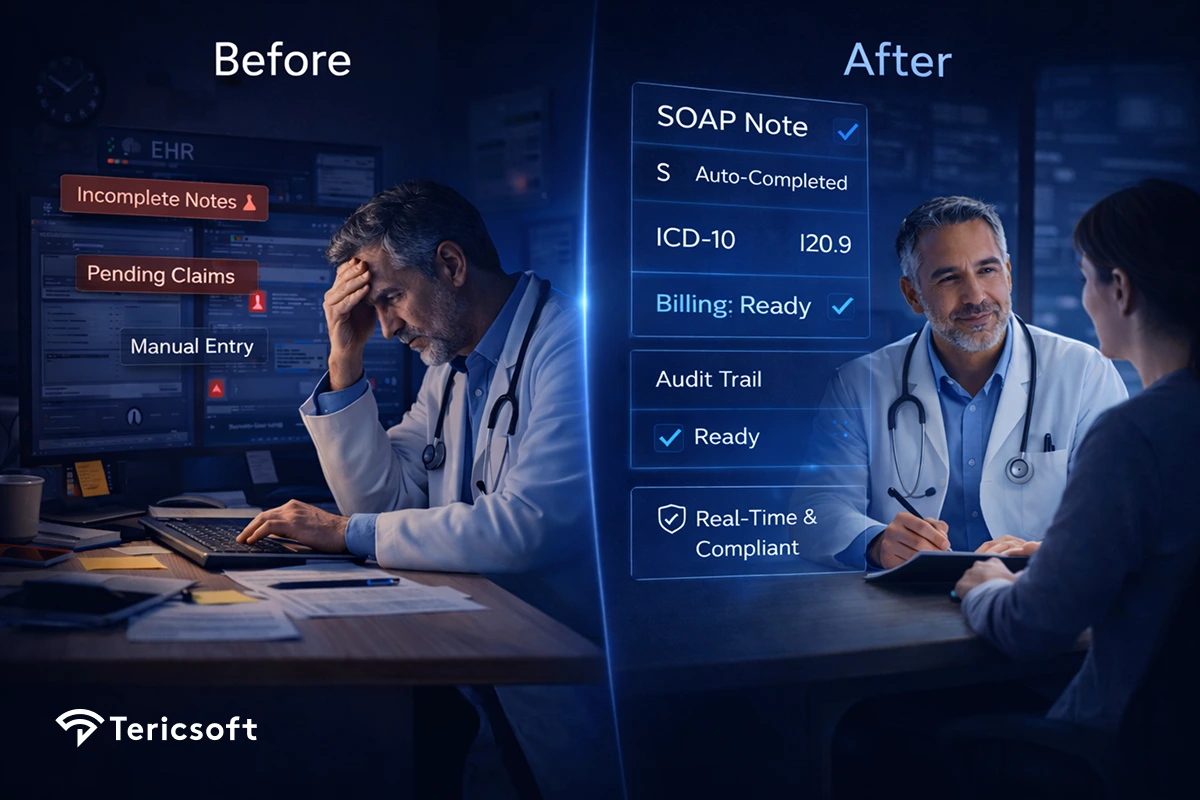
In the quiet corners of a bustling metropolitan hospital, a senior cardiologist finishes his final consultation. For years, this moment did not signal the end of his shift; it marked the beginning of "pajama time." Before he could return to his family, he faced a four hour mountain of Electronic Health Record (EHR) entries. He navigated fragmented menus and dictated notes that often felt like they were written for billing codes rather than patient care. This is the "Administrative Tax" of modern medicine, a primary friction point that drains the cognitive resources of our most skilled providers.
Today, the narrative is shifting. Large healthcare organizations are moving away from viewing documentation as a manual chore. Instead, it is becoming a data stream that can be autonomously captured and structured. The advent of AI for Clinical Documentation has moved beyond simple transcription; it has become the cognitive layer that sits between the physician and the machine, restoring the focus to the patient provider encounter. For the modern CIO, this is a strategic talent retention asset. In a labor market defined by clinician scarcity, the organizations that thrive will be those that treat a physician's cognitive bandwidth as their most precious resource. By shifting documentation from an active task to a passive byproduct, hospitals can essentially reclaim up to 25% of their workforce's capacity without increasing headcount.
The Strategic Role of AI in Modern Clinical Documentation
To understand this transformation, we must define the boundaries of the technology. At its core, AI for Clinical Documentation is a cognitive ecosystem designed to interpret and record medical encounters in real time. Unlike traditional dictation software, which acts as a digital typewriter, AI driven systems leverage machine learning to understand clinical significance. It is the difference between recording words and capturing intent.
What is Clinical Documentation?
In an enterprise healthcare context, clinical documentation is the legal and medical record of a patient encounter. It includes SOAP notes, discharge summaries, and operative reports. In a large hospital network, these are not just clinical tools; they are legal artifacts and the primary source for revenue cycle management. Historically, this required manual entry by the physician, a process prone to fatigue induced errors and significant lag times. When documentation is manual, the data is often "lossy," meaning critical clinical nuances are lost between the exam room and the keyboard.
AI Clinical Documentation in Healthcare
Modern AI systems solve this by automating the generation of records through passive listening. The technology extracts the "signal"-the clinically relevant data—to populate the EHR. A 2024 study in JAMA Network Open found that physicians using AI assisted documentation reported a 74% reduction in the odds of experiencing burnout after just 30 days. This represents a shift to synchronic documentation, where the medical record is finalized almost as the patient leaves the room, ensuring the highest fidelity of information.
Why Large Healthcare Organizations Need AI for Clinical Documentation
Large hospital networks face unique pressures such as high patient throughput and rigorous regulatory audits. Manual entry creates a bottleneck that limits bed turnover and increases the risk of denied claims. When a clinician sees 25 patients a day, "documentation decay" becomes a liability. AI allows these organizations to scale documentation standards across thousands of providers, ensuring every note is comprehensive, coded correctly, and completed instantly. This scalability is the foundation of a modern, data driven health system.
How AI for Clinical Documentation Works
The technical framework of enterprise grade AI is a multi stage pipeline. It is not a single model, but a chain of specialized agents working in concert to ensure that the cardiologist's conversation is translated into a precise medical record.
Speech Recognition in AI for Clinical Documentation
The process begins with medical grade Automatic Speech Recognition (ASR). Unlike consumer assistants, these models are trained on clinical dialogue to distinguish between complex drug names and various accents in high noise environments. This layer ensures that even in a chaotic ER, the nuance of the clinician's voice is preserved, providing the raw data needed for intelligent analysis.
Natural Language Processing for Clinical Notes
Once transcribed, Natural Language Processing (NLP) identifies entities such as symptoms and dosages. Advanced NLP understands clinical relationships, recognizing that "denying chest pain" is as critical as "reporting shortness of breath." This phase is where the "intent" is extracted. The system parses the dialogue to distinguish between the patient's current complaint and their historical medical background, ensuring the record reflects the actual clinical trajectory.
Context Understanding and Clinical Summarization
The system does not just transcribe; it summarizes. It recognizes the clinical narrative and organizes data into the correct sections of a SOAP note. This summarization is built on Large Language Models fine tuned on medical textbooks and peer reviewed cases. It ensures that the final output is not just a transcript, but a professional clinical summary that another specialist can interpret instantly, facilitating seamless transitions of care.
EHR and EMR Systems Integration
For a large organization, AI is only as useful as its integration. Enterprise platforms offer sidecar integrations with systems like Epic and Cerner, ensuring generated notes flow directly into the patient chart without requiring the physician to copy and paste across windows. This automation bridges the gap between the conversation and the permanent record, making the AI a natural extension of the clinician's existing workflow.
Ambient Clinical Intelligence
The most effective iteration of this technology is Ambient Clinical Intelligence (ACI). Here, the AI operates passively via a mobile device or sensor. There are no wake words. The technology operates in the background, allowing the physician to maintain eye contact with the patient. It provides the utility of a human scribe without the physical presence, ensuring that the technology supports the human relationship rather than distracting from it.
However, the utility of ambient capture is only as valuable as the security framework protecting it. For the enterprise, documentation efficiency must never come at the cost of data sovereignty.
AI Clinical Documentation and Healthcare Compliance
For the CIO, the primary barrier to adoption is governance. Trust is the baseline for healthcare AI, and maintaining it requires adherence to global standards that protect patient privacy and organizational integrity.
HIPAA Compliance in AI Clinical Documentation
In the US, AI vendors must sign a Business Associate Agreement (BAA). Modern systems utilize de identification layers to redact Protected Health Information (PHI) from training sets. This means the AI learns from clinical patterns without ever remembering the specific identity of the patient, balancing the need for model improvement with the absolute mandate for privacy.
NHS and UK Data Governance Standards
For UK based trusts, compliance involves rigorous clinical safety standards. Systems must demonstrate that the AI does not introduce clinical risk and that data is handled in accordance with stringent UK data protection laws. This localized governance ensures that the automation aligns with the broader goals of the NHS Long Term Plan.
Data Localization and Security in India
In regions like India, healthcare data must be stored and processed within national boundaries. Enterprise AI partners must provide localized cloud instances to comply with the Ayushman Bharat Digital Mission (ABDM) and the Digital Personal Data Protection (DPDP) Act. This data sovereignty is essential for large hospital chains operating across multiple states.
Audit Trails and Explainability in AI Systems
Enterprise systems must be auditable. Every summary generated by the AI should be traceable back to the source transcript. This "explainability" is crucial for risk management, allowing clinical leaders to verify the accuracy of the record and maintain a clear chain of evidence for every diagnosis and treatment plan recorded.
Once the compliance guardrails are established, organizations must decide which specific tools will carry the clinical load across their diverse departments.
AI Clinical Documentation Tools
Evaluating tools for a hospital network requires a lens focused on security, specialty needs, and the capacity to handle high volume data streams.
AI Medical Scribe Software
AI Medical Scribe software provides the output of a human assistant with 24/7 availability and zero privacy intrusion. These tools are designed to work across various clinical environments, from bedside rounds to telemedicine consultations, providing a consistent documentation experience regardless of where the care is delivered.
Cloud vs. On-Premise Deployment
Leadership must decide between Cloud (SaaS) models for rapid scalability or On-Premise models for high security environments where total control over the data perimeter is required. The choice often depends on the organization's existing infrastructure and its long term strategy for managing hybrid workloads.
Enterprise-Grade AI Documentation Platforms
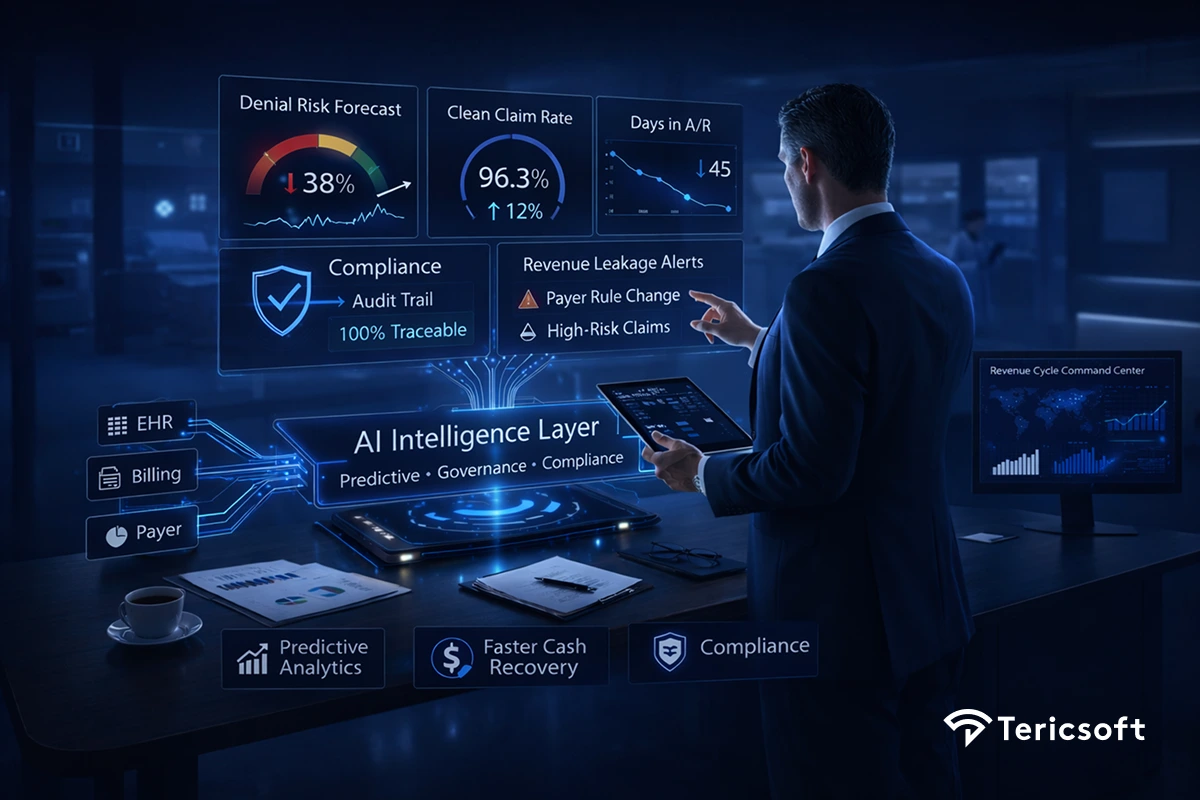
An enterprise platform provides a command center for administrators to monitor adoption rates and audit AI accuracy from a central dashboard. These platforms allow the hospital to manage thousands of users simultaneously while ensuring that every department, from radiology to pediatrics, adheres to the same clinical quality standards.
The selection of these tools is a capital expenditure that leadership must justify through measurable returns in clinical capacity and revenue integrity.
Reclaiming Clinical Capacity: The Enterprise ROI of AI Documentation
The return on investment for AI documentation is measurable across four key pillars that directly impact the hospital's operational and financial health.
- Reduced Physician Burnout: Research from University of Wisconsin Health found that ambient AI saved 30 minutes of documentation time per day per provider. This reclaiming of time directly reduces the "Administrative Tax" and helps prevent the turnover that costs organizations significant sums in recruitment fees.
- Improved Documentation Accuracy: AI captures the full nuance of the conversation, leading to more defensible medical records that stand up to legal and insurance scrutiny. By documenting every clinical interaction, hospitals reduce the risk of under coding or omitted data.
- Faster Billing and Revenue Cycle Optimization: Faster note completion leads to accelerated billing. According to the American Medical Association (AMA), documentation specificity from AI reduces claim denials by accurately capturing high level Evaluation and Management (E/M) codes, ensuring clinical work is accurately matched to reimbursement.
- Operational Cost Reduction: Research in the Journal of the American Medical Informatics Association (JAMIA) highlights that enterprise deployment can offset approximately 40% of its own costs simply by eliminating redundant human scribe contracts. Over several years, this transition saves significant personnel costs for large networks.
While these operational gains offer a clear path to optimization, the strategic decision for leadership often comes down to a direct comparison of current human-led workflows against automated alternatives.
AI for Clinical Documentation vs. Traditional Documentation Systems
The decision to migrate from legacy processes to AI driven systems is driven by a need to balance fiscal responsibility with clinical excellence. While manual entries and human scribes have served as the standard for decades, they introduce significant variability in quality.
A common misconception is that more detailed AI notes are always better. In reality, excessive data can increase cognitive load. The true value of AI isn't in capturing everything; it is in its ability to selectively filter, distilling a 20 minute conversation into the critical clinical facts that determine the patient trajectory. In clinical documentation, concise accuracy is more valuable than exhaustive volume.
Challenges in AI for Clinical Documentation and How to Avoid Them
Deploying artificial intelligence within an enterprise healthcare framework is complex. Stakeholders must proactively address technical and cultural hurdles to ensure that the transition to automated documentation is both secure and sustainable.
Challenge 1: Data Privacy Risks
Risk: Large healthcare organizations are primary targets for ransomware. The primary risk involves the unauthorized interception or storage of sensitive patient provider audio recordings.
How to Avoid: Implement a Zero Trust architecture where no device is trusted by default. Ensure audio recordings are processed in memory and deleted immediately once the structured note is finalized.
Challenge 2: AI Hallucination in Clinical Notes
Risk: Large Language Models (LLMs) can occasionally "hallucinate," generating plausible but medically incorrect information.
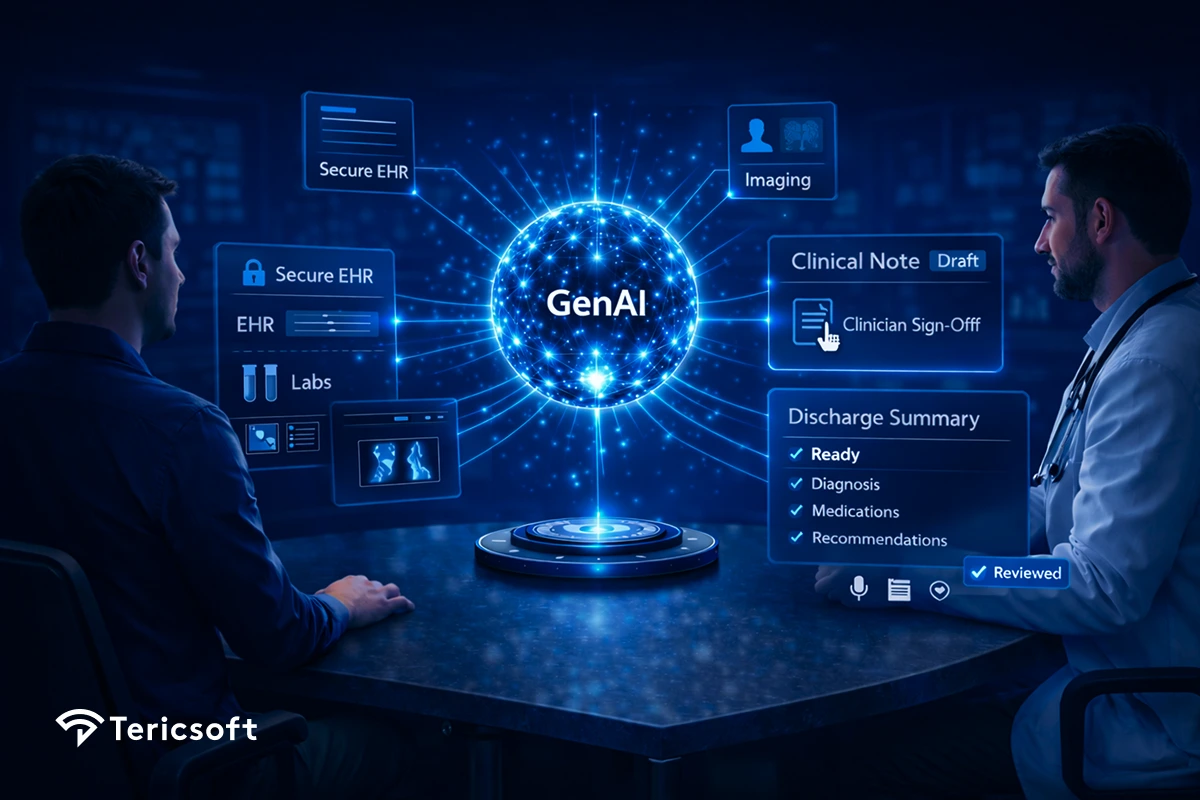
How to Avoid: Maintain a strict "Human in the Loop" (HITL) protocol. The AI must act as a drafter, never an author. The physician must review, edit, and manually sign off on every note before it enters the permanent record.
Challenge 3: Integration Complexity with EHR Systems
Risk: Physicians suffer from cognitive overload. Introducing a standalone AI documentation tool can lead to adoption friction if it requires extra clicks or separate logins.
How to Avoid: Prioritize API first deep integration. Partner with vendors that offer native "sidecar" integrations that allow the AI scribe to live inside the existing EHR mobile app.
Challenge 4: Physician Resistance to AI
Risk: Technology can fail if it is viewed as an "imposition." Fears of surveillance can lead to low adoption rates.
How to Avoid: Roll out the technology first to a small group of tech forward "Clinical Champions" who can advocate for the benefits. Clearly communicate that the technology is designed to assist, not replace, the clinician.
Future of AI for Clinical Documentation
Technical progress indicates a shift toward a world where documentation is a natural output of clinical care, allowing the clinician to focus entirely on the human in front of them.
- Generative AI in Healthcare Documentation: Moving beyond SOAP notes to generate patient friendly summaries in multiple languages, improving health literacy and patient engagement.
- Real Time AI Clinical Decision Support: AI that suggests potential diagnoses or missing lab tests based on the conversation it just heard, acting as an assistive co pilot for the physician.
- Multilingual AI Documentation for Global Healthcare: Breaking down language barriers by providing real time translation and documentation for non native speakers.
- Autonomous Clinical Workflow Assistants: By 2028, AI will likely transition from a tool that writes notes to a system that manages clinical intent, significantly reducing the manual burden of the current medical record.
Enterprise Implementation Framework
For organizations ready to adopt, we recommend a six step roadmap:
- Workflow Assessment: Identify departments with the highest burden, such as Emergency Medicine. This ensures that the first pilot generates the highest impact.
- Data Security Review: Verify BAAs and SOC2 Type II certifications. This stage ensures that the legal foundation is as strong as the technical one.
- Model Selection: Choose between general and specialty specific NLP models. Large networks often require a mix of both depending on the complexity of care.
- Compliance Mapping: Ensure data localization and audit tools are in place. This is critical for organizations operating in multiple regulatory jurisdictions.
- Pilot Deployment: Run a 30 day program with clinical champions. These early adopters are essential for overcoming initial resistance and refining the workflow.
- Enterprise Rollout: Scale with centralized training. This stage involves the full integration of AI into the hospital's digital culture.
Why AI for Clinical Documentation Is a Strategic Priority for CIOs
In an era of labor shortages, clinical documentation is a critical frontier for hospital efficiency. CIOs who prioritize AI are not just buying a tool; they are investing in the long term health of their institution. It is a fundamental shift in how the hospital processes its most valuable asset: clinical expertise. As these systems mature, clinical care and its record will become increasingly synchronized, allowing physicians like the cardiologist in our story to leave the hospital with their administrative tasks already finalized.
How We Enable AI for Clinical Documentation for Enterprises
At Tericsoft, we view AI as foundational infrastructure. We provide an enterprise grade ecosystem tailored to hospital networks, featuring compliance first architecture and deep EHR integrations.
- Compliance-First Architecture: Built to exceed HIPAA, NHS, and ABDM security standards.
- Plug-and-play EHR Integrations: We speak the language of Epic and Cerner, ensuring seamless data flow.
- Enterprise-grade Security: Utilizing the latest in encryption and de identification technology.
- Custom NLP models for specialties: Tailored intelligence for cardiology, oncology, and more.
- Governance dashboards: Full visibility into AI usage and ROI across your entire hospital network.
About Tericsoft
Your AI transformation partner enabling secure and scalable AI for Clinical Documentation across large healthcare organizations. We bridge the gap between complex clinical needs and enterprise grade technology.

Yes, enterprise-grade platforms support HIPAA, NHS, and ABDM compliance with encryption, BAAs, audit trails, and strict access controls.
Most ambient AI systems achieve over 95% accuracy, with physicians reviewing and approving notes through a Human in the Loop model.
Yes, enterprise solutions offer deep API-based integrations that allow AI-generated notes to flow directly into existing EHR workflows.
AI reduces reliance on human scribes by automating documentation in real time while improving scalability and lowering long-term costs.
Typically 6 to 12 weeks, including security validation, pilot deployment, EHR integration, and staff training.