A corporate commute looks like a problem a ride-hailing app could solve. It is a trap: a commute is the same people, routes, and seats every day, the opposite of what ride-hailing is built for.
A corporate commute looks like a problem a ride-hailing app could solve: people need to get to the office, so match them with a vehicle and go. It is a trap. Ride-hailing is engineered for the opposite of a commute, one-off trips between strangers, matched dynamically, priced by surge. A commute is the same people, on the same routes, in the same seats, every working day. Build it like a cab app and you get an expensive, unreliable service nobody trusts. Build it like what it actually is, a scheduled, subscription, fixed-route network, and it becomes the thing employees plan their day around. The two look alike on a map and are opposite everywhere that matters.
We designed and built the complete platform for Daily Shuttles, a premium corporate shuttle network in Hyderabad that went live with 20-plus routes and 200-plus air-conditioned buses on one digital system, from booking to live tracking, on day one. This article is what that work made clear about why corporate commute is its own category, not a ride-hailing feature.
Why the commute is a business problem, not a perk
Start with the stakes, because they explain why doing this badly is so expensive. The commute is not a nicety bolted onto a job; it is a daily tax employees pay in time and stress, and they quit over it. In a 2024 randomized controlled trial of 1,612 employees published in Nature, Bloom, Han, and Liang found that hybrid work cut quit rates by around 52 percent among employees with long commutes, the group the study identified as most likely to leave in the first place.
A reliable, premium commute is therefore a retention lever, not a logo on a bus. That is also why the category is unforgiving: a commute people depend on and a commute they endure are separated by whether the platform underneath treats it as the recurring, planned, trust-based service it is.
Four ways corporate commute is not ride-hailing
The differences are not cosmetic. Each one breaks a core assumption a ride-hailing system is built on.
The first is that a commute is recurring, not one-off. A rider commits to a route for weeks or months, so the unit of the business is a pass or subscription, not a fare. The second is fixed routes, not dynamic matching: the network is a planned set of routes and stops, optimized and run on a schedule, not re-solved from scratch on every request. The third is reserved seats, not first-come: a commuter needs a guaranteed seat at a known time, not a scramble and a surge price when demand spikes at nine in the morning. The fourth, and the one that decides everything, is that predictability is the product. People arrange meetings, childcare, and sleep around the bus. A late or invisible bus does not cost a fare. It costs trust, and trust is the entire premium.
The pass is the product, not the ride
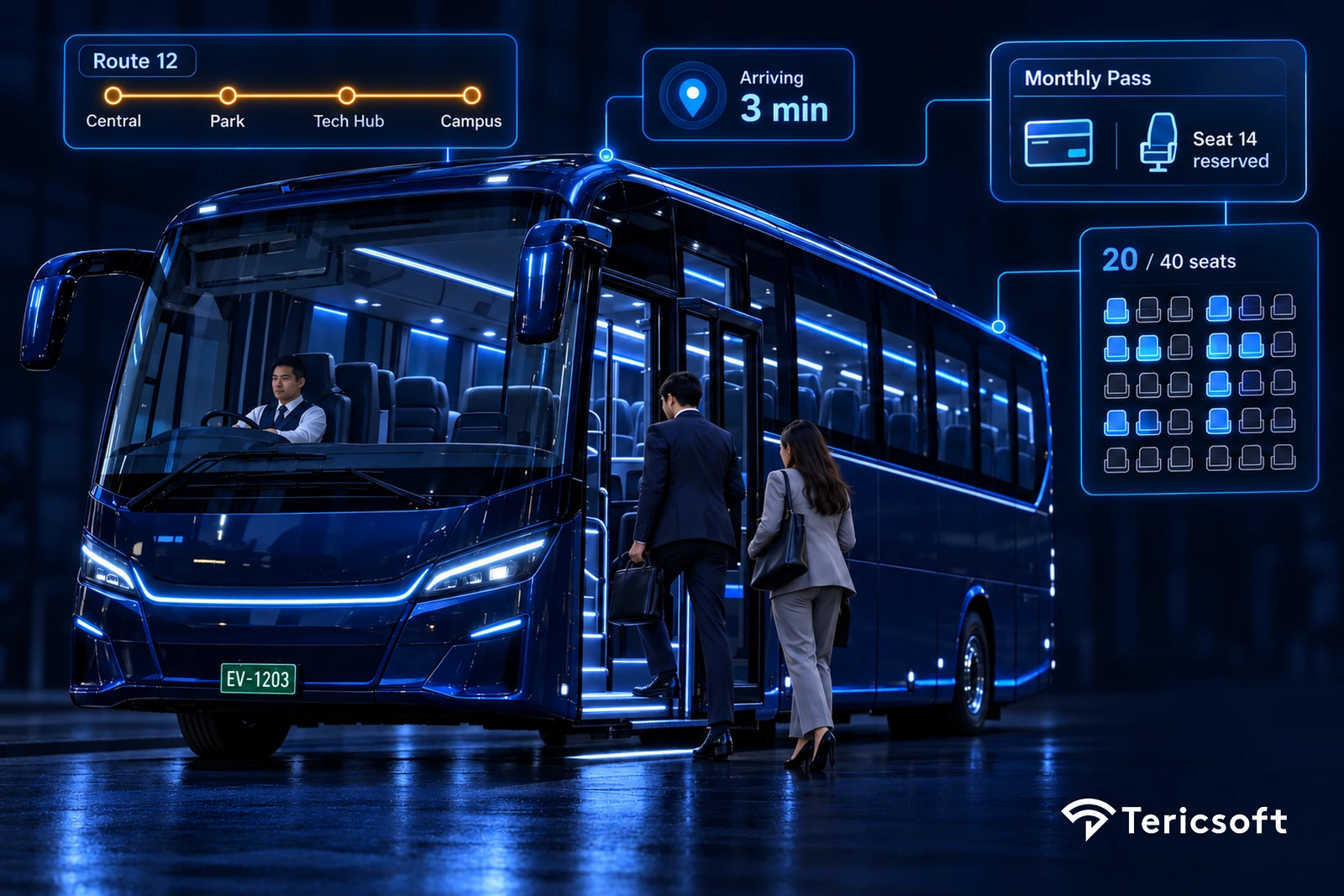
Because the commute is recurring, the platform's center of gravity is the pass, not the trip. In a corporate shuttle service built right, the rider opens an app, discovers the routes near them, picks their stop, and buys a pass that reserves a seat on a known schedule. The booking flow is designed for someone setting up a routine, not hailing a one-off ride.
That single design choice ripples through everything. Revenue is predictable because it is subscription, not spot. Demand is knowable in advance because riders commit to routes, which is what makes planning a fixed fleet possible at all. An employee shuttle service that makes people rebook a seat every morning has quietly rebuilt the stress it was supposed to remove. That is the real shape of employee commute management: a recurring relationship, not a string of separate rides.
Matching demand to a fixed fleet
Here is the hard operational problem, and it is the opposite of surge pricing. Ride-hailing solves a shortage of cars by raising the price until demand falls. A shuttle network has a fixed fleet of buses in fixed sizes, and the job is to match committed rider demand to that seat capacity so buses run full and no route is starved or over-served.
That is a capacity-planning problem, not a dispatch one. The operations engine has to plan routes against where riders actually are, allocate the right bus to each route, often choosing between a 20-seat and a 40-seat vehicle by demand, and manage pass availability so a route fills without overselling. This is where route planning stops being a shortest-path question and becomes a question of occupancy and economics. A good employee transportation management software layer is judged on whether its buses run full, not on how clever its map looks.
Reliability is the feature riders buy
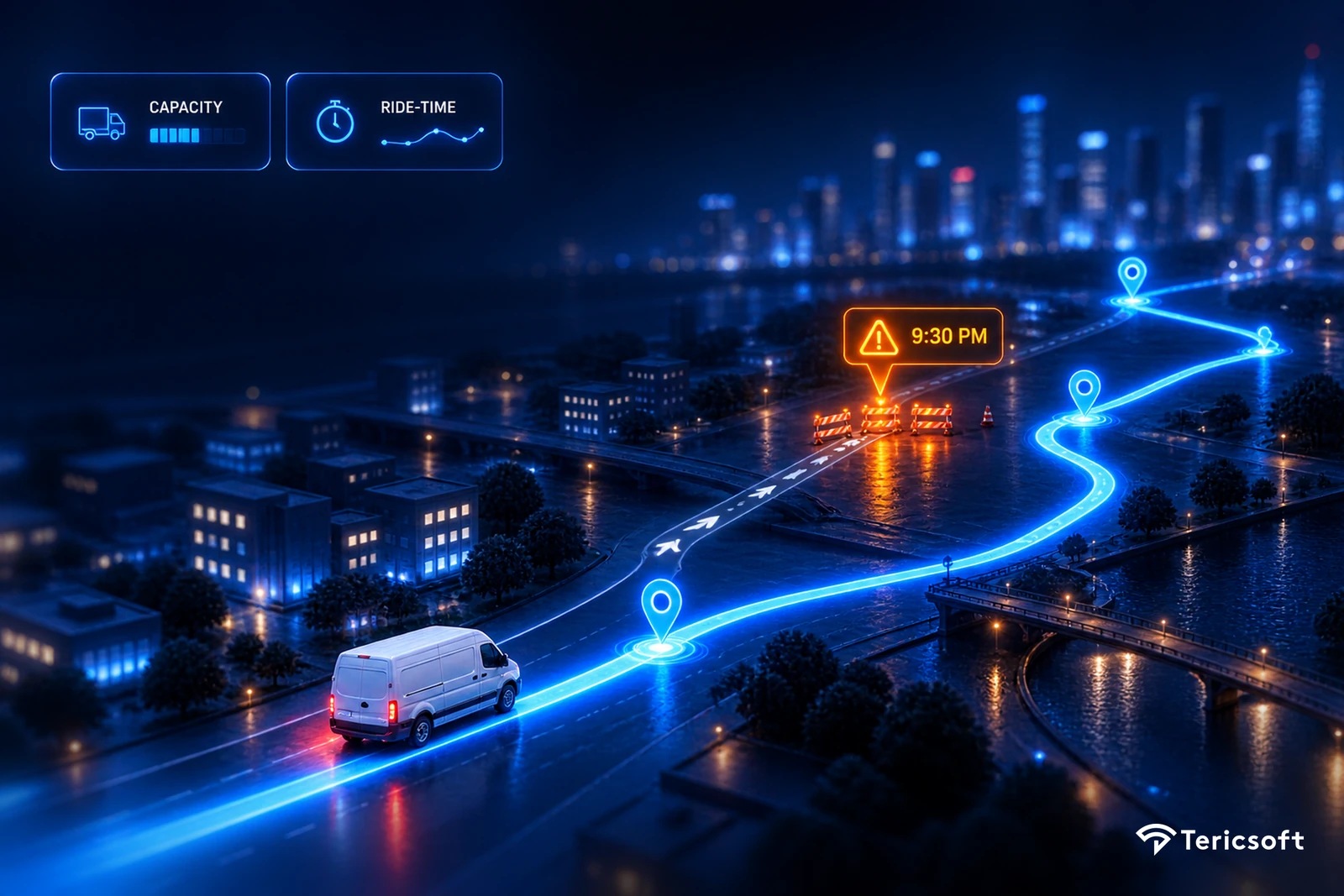
A premium commute is sold on trust, and trust is built on one thing: the bus being where the app says it is, when it says it will be there. Real-time tracking is not a nice extra here; it is the product keeping its promise. Riders and operations both need live bus tracking, the rider so they can time their walk to the stop, operations so they can act before a delay becomes a complaint.
The scheduling target matters just as much. A network designed for a 15 to 30 minute service frequency through the peak is making a promise about wait time, and the platform exists to keep that promise visible and honest. Miss it quietly and the premium evaporates; a commuter who gets stranded once is far more likely to stop trusting the bus.
Why you build this, not rent it
There are capable corporate transportation software products on the market, and for a company that simply needs to bus its own staff between two offices, renting one is usually the right call. The build-versus-buy line is about who owns the experience. An operator whose business is a premium, branded commute network tends to struggle to differentiate on someone else's dashboard, because the rider app, the pass model, the capacity engine, and the reliability promise are the product, and a product is hard to set apart when it is configured within a vendor's limits rather than owned.
That is the vantage behind this article. Daily Shuttles did not need a transport feature; it needed a complete mobility platform it owned, launched as a network from day one. The difference between a commute service that scales into a brand and one that stalls as a pilot is usually whether the platform was built for the business or rented from a catalog.
What building Daily Shuttles taught us
The platform went live as a network, not a trial: a complete corporate shuttle system from booking to live tracking on day one, across 20-plus routes in Hyderabad, running 200-plus air-conditioned buses, with a 100 percent digital journey from discovering a route to riding it. Fleet allocation was demand-driven across 20-seat and 40-seat buses, and the service was designed for a 15 to 30 minute frequency through peak hours.
The lesson underneath the numbers is simple. The hard part of a corporate commute platform was never the map or the GPS dot. It was matching a human routine, the same people, the same stops, every day, to a fixed fleet, reliably enough that people would pay for it monthly and build their lives around it. Solve that and a commute stops being something employees endure and becomes something that keeps them.
Key takeaways
- Corporate commute is not ride-hailing. It is recurring, route-based, seat-reserved, and predictable, which breaks every assumption a dynamic-matching cab app is built on.
- The pass is the product. A subscription, route-and-seat model makes revenue predictable and demand knowable, which is what makes planning a fixed fleet possible.
- The ops problem is capacity, not surge. Matching committed demand to fixed seat capacity across bus sizes is a planning problem, and full buses are the measure of success.
- Reliability is the premium. Real-time tracking and honest arrival times are the product keeping its promise, and broken promises are what erode the trust a premium commute is sold on.
About Tericsoft
Tericsoft builds the platforms that run real-world mobility operations, not feature add-ons to someone else's app. For a premium commute network that meant one owned system where route and capacity planning, a pass-based rider experience, and live tracking work together, so a company can launch a branded shuttle network as a network rather than a pilot. We are an AI-first technology partner, and we tend to be brought in when an operation is too specific, too premium, or too large to run on a catalog product. If your commute offering has to feel like a product your riders trust and a network you own, that is the problem we engineer for.

Ride-hailing matches one-off trips priced by surge. A corporate commute is recurring, fixed-route, and seat-reserved, so it runs on passes.
Software that runs a shuttle network end to end: pass booking with reserved seats, route planning, bus allocation, and live tracking.
Commuters want a routine, not a daily scramble. A pass reserves a seat on a schedule and makes demand knowable, enabling fleet planning.
Plan routes where riders commit, pick the right bus size (20 or 40 seats), and manage passes so buses run full, not surge pricing.
Buy to just bus staff between offices. Build if a premium branded network is your business: the app and capacity engine are the product.