How can enterprises bridge the massive execution gap between isolated AI pilots and measurable business value in 2026? Learn how unified AI platforms are dismantling fragmented data silos, orchestrating intelligent workflows, and enabling global organizations to operationalize enterprise-grade AI frameworks at scale.
Imagine a high-stakes quarterly review inside the boardroom of a global logistics enterprise. The Chief Data Officer stands before the executive committee, proudly showcasing a portfolio of fifteen different artificial intelligence initiatives. There is a computer vision model tracking warehouse inventory, a generative chatbot handling vendor queries, and a predictive algorithm forecasting regional demand. The technology is undeniably impressive. Then, the Chief Financial Officer leans forward and asks the only question that matters. What is the net economic impact of these models on our bottom line?
The room falls completely silent. The models work perfectly in isolation, but they are not connected to the central Enterprise Resource Planning system. They do not automatically trigger purchase orders, and they do not fundamentally alter the daily workflow of the operations team. The initiatives are technically successful but commercially invisible.
This exact scenario is currently playing out in boardrooms across the world. Enterprises today are not struggling to adopt artificial intelligence. They are struggling to scale it. Despite massive capital allocation and widespread experimentation, the vast majority of organizations remain trapped in an endless cycle of pilot programs. They find themselves fundamentally unable to translate localized technical victories into enterprise-wide financial impact.
While 88% of enterprises have adopted AI, only ~21% have successfully scaled it, highlighting a massive execution gap between experimentation and enterprise value.
The core thesis for modern business leaders is clear. The real challenge is not building sophisticated AI models. The true challenge is embedding those models deeply into enterprise systems, operational workflows, and automated decision-making frameworks at scale. Scaling AI in enterprises requires a permanent departure from isolated experimentation. It demands a foundational shift toward unified, governed, and scalable enterprise platforms.
What Is an Enterprise AI Platform?
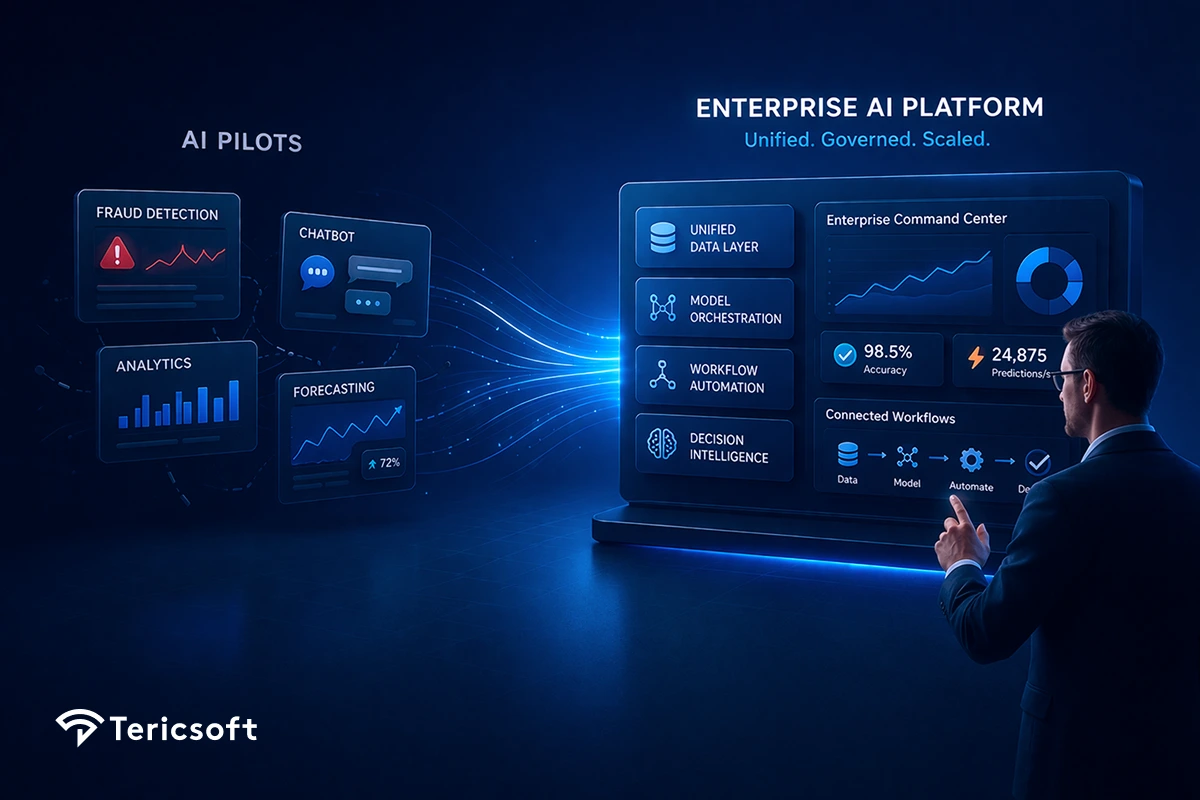
An enterprise AI platform is a unified system that integrates data, models, infrastructure, and workflows to operationalize AI across the organization at scale. Instead of relying on fragmented, localized applications, a true platform approach provides:
- Unified data layer: A centralized, governed foundation acting as a single source of truth.
- Model deployment & orchestration: Streamlined infrastructure to deploy, manage, and scale models continuously.
- Deep workflow integration: AI capabilities embedded directly into core business systems and daily operations.
Why Most AI Initiatives Start with Pilots
The journey into artificial intelligence almost universally begins with a pilot program. For organizations navigating the complexities of emerging technologies, starting small feels inherently logical and strategically safe. However, understanding why companies gravitate toward these localized experiments is crucial for understanding why they eventually face extreme friction when attempting to scale those same initiatives across the broader business.
The Rise of AI Experiments Across Enterprises
The past few years have witnessed an unprecedented surge in corporate AI experimentation. This acceleration is driven by the absolute explosion of enterprise data, the sudden accessibility of advanced generative AI tools, and immense competitive pressure from industry disruptors. Executive boards are mandating artificial intelligence integration, prompting individual department heads to launch isolated experiments.
Consequently, most modern enterprises are currently running multiple AI pilots simultaneously. The marketing team tests personalized content generators. The finance team experiments with anomaly detection. Yet, despite this high volume of activity, only a microscopic fraction of these experiments ever reach a production environment.
Why Organizations Begin with Small AI Pilot Projects
Organizations naturally default to pilot projects because they offer a highly attractive risk profile. Pilots require remarkably low financial investment, involve limited operational scope, and provide exceptionally fast validation cycles. They allow risk-averse stakeholders to observe artificial intelligence in action without committing to a massive digital transformation overhaul.
The fundamental issue is that these pilot projects are strictly designed to prove technical feasibility. They are never designed to test operational scalability. A pilot simply proves that an algorithm can process a specific dataset. It does not prove that the algorithm can withstand the chaotic, real-time demands of global enterprise operations.
Common Business Problems AI Pilots Try to Solve
When departments launch these localized initiatives, they typically target high-visibility, high-impact business problems. In the banking sector, pilots frequently focus on localized fraud detection for specific credit card tiers. In retail, they target customer support automation for a single product line. In manufacturing, they attempt basic demand forecasting for regional distribution centers.
These are undeniably valuable business problems to solve. The tragedy is that the solutions generated by these pilots remain entirely isolated. Because they are not integrated into the central enterprise architecture, their impact is severely capped. They solve the problem in a vacuum, failing to scale intelligence across the enterprise.
Why Many AI Pilots Fail to Scale
Crossing the operational chasm from a successful localized prototype to a production-grade enterprise system is exactly where the majority of corporate AI initiatives collapse. This failure is rarely a failure of data science or mathematical accuracy. It is a profound failure of enterprise architecture, system integration, and organizational alignment.
The Gap Between AI Experiments and Production Systems
There is a massive structural gap between a controlled experiment and a live production system. Pilots operate in highly sanitized environments. Data scientists manually clean the datasets, the infrastructure is completely isolated from daily operations, and user traffic is strictly controlled.
Production environments require an entirely different level of rigor. They demand seamless integration with legacy enterprise systems, massive scalability across multiple global departments, strict access controls, and absolute reliability. A model that achieves ninety-nine percent accuracy on a static spreadsheet will almost certainly break when exposed to the unpredictable anomalies of live corporate data streams.
With 95% of enterprise AI pilots failing to deliver measurable business impact, it is evident that a successful isolated experiment does not guarantee a scalable production system.
Data Silos and Infrastructure Limitations
Data fragmentation represents the single largest technical barrier to scaling AI in enterprises. Corporate data is notoriously disorganized. It is trapped across legacy Enterprise Resource Planning systems, customized Customer Relationship Management platforms, and isolated departmental databases.
Scaling AI requires models to learn from a holistic view of the business. When data is siloed, models cannot generalize properly, resulting in biased or incomplete outputs. Without a unified data infrastructure delivering clean, real-time information, transitioning from a pilot to a platform becomes a technical impossibility.
Lack of Organizational Alignment and AI Governance
Many artificial intelligence initiatives are launched as rogue IT projects or shadow operations within individual business units. They inherently lack clear executive ownership, comprehensive governance frameworks, and necessary cross-functional alignment.
When an initiative lacks a defined owner who is strictly accountable for business outcomes, it invariably stalls. Furthermore, deploying models without rigorous governance exposes the enterprise to severe compliance risks, algorithmic bias, and security vulnerabilities. This lack of strategic alignment ensures that AI remains a fascinating experiment rather than a permanent enterprise capability.
The Challenge of Integrating AI into Existing Workflows
The most sophisticated predictive model is completely useless if employees do not use it. Most pilot-stage AI tools sit entirely outside core corporate workflows. They require employees to log into separate dashboards, manually input data, and then manually transfer the insights back into their primary operational systems.
For artificial intelligence to actually scale and drive economic value, it must be deeply embedded directly into existing workflows. It must operate invisibly within the applications that employees already use every single day, actively influencing real-time decisions without requiring manual intervention.
Strategic Challenges and How to Avoid Them
To successfully navigate the transition from experimentation to enterprise impact, business leaders must proactively address specific operational bottlenecks. The following framework outlines the most common structural challenges and the definitive strategies required to overcome them.
What Enterprise AI at Scale Actually Looks Like
Understanding the flaws of pilot programs is only half the equation. Business leaders must possess a clear vision of the ultimate destination. When artificial intelligence is successfully scaled across an enterprise, it fundamentally changes the operational DNA of the organization. It transitions from a disparate collection of tools into a centralized engine of continuous corporate intelligence.
Moving from Isolated Models to AI-Driven Platforms
Mature enterprises aggressively evolve from funding standalone models to investing in unified AI platforms. A platform approach centralizes computational resources, standardizes deployment methodologies, and establishes a single source of truth for all corporate data.
Platforms enable massive reusability. If the compliance department builds a natural language processing model to scan regulatory documents, a platform architecture allows the legal team to easily adapt that exact same model for contract analysis. For example, deploying a secure, centralized enterprise LLM architecture ensures that every department has access to state-of-the-art generative capabilities without exposing proprietary data to public networks.
Embedding AI into Core Business Processes
At a true enterprise scale, artificial intelligence ceases to look like a separate software application. Instead, it becomes a seamless component of standard business processes. It is woven directly into complex financial workflows, critical healthcare systems, and global supply chain operations.
To achieve this level of integration while maintaining absolute accuracy, organizations frequently utilize advanced architectures like Retrieval-Augmented Generation (RAG). This approach dynamically links powerful language models to internal corporate databases, ensuring that the AI delivers highly contextual, factually accurate insights directly within the user's daily operational process.
How AI Becomes Part of Enterprise Decision Systems
The most significant marker of scaled enterprise AI is the transition from passive reporting to active decision-making. Traditional analytics simply report what happened yesterday. Pilot-stage predictive models suggest what might happen tomorrow. Scaled enterprise AI actively decides what to do right now.
This shift transforms organizations. It powers real-time financial risk scoring that automatically approves or denies credit applications in milliseconds. It drives automated inventory purchasing decisions based on localized weather patterns and competitor pricing. Artificial intelligence becomes the definitive system of execution.
“AI’s success must be measured in economic impact, not benchmarks.”
— Satya Nadella, CEO of Microsoft
The Architecture Behind Scalable Enterprise AI
Scaling AI is not a data science problem. It is an enterprise architecture problem.
Transforming a corporate vision into operational reality requires a highly resilient, production-grade technology stack. Enterprises must design a centralized environment built specifically for continuous deployment, rigorous security, and massive computational scale.
Building the Enterprise Data Foundation
Every successful artificial intelligence platform is built on top of a flawless data foundation. Scalable AI requires unified data platforms that aggregate information from every corner of the business. It requires robust, real-time data pipelines that ensure models are constantly fed with the most current information. Most importantly, it requires perfectly clean, highly governed datasets that establish absolute trust in the final output.
Machine Learning Infrastructure and Model Operations (MLOps)
Developing an accurate algorithm is merely the first step. Maintaining its accuracy in a live production environment requires mature Machine Learning Operations. MLOps serves as the bridge between data science and IT operations.
It enables the continuous integration and continuous deployment of new models. It facilitates aggressive model monitoring to instantly detect data drift, ensuring that algorithms do not degrade as market conditions change. Without a mature MLOps infrastructure, enterprise AI simply cannot scale reliably.
Model Governance, Monitoring, and Lifecycle Management
As AI systems take on more critical decision-making authority, governance becomes a mandatory architectural layer rather than a secondary compliance checkbox. Enterprise AI must include automated drift detection to track performance degradation over time.
It must feature absolute algorithmic explainability, allowing human auditors to understand exactly why a model made a specific decision. It must also enforce strict compliance controls to navigate complex regulatory environments, particularly regarding consumer data privacy.
Integrating AI Systems with Enterprise Applications
The final architectural pillar is bi-directional integration. Scalable artificial intelligence must connect seamlessly with existing Enterprise Resource Planning systems, Customer Relationship Management tools, and daily operational applications. The AI platform must be able to read data from these systems, process it, and then instantly write executable commands back into them. This deep, programmatic integration is the exact moment where theoretical models translate into tangible business value.

Key Organizational Changes Required to Scale AI
Deploying advanced infrastructure is insufficient if the organization itself is not structured to support it. Scaling AI necessitates a profound restructuring of internal corporate culture, team dynamics, and strategic measurement. Moving from localized IT projects to a comprehensive enterprise capability requires visionary leadership and sweeping organizational change.
Building Cross-Functional AI Teams
The era of the isolated data science team is over. Successful AI operationalization requires the immediate formation of highly integrated, cross-functional teams.
These teams must mandate continuous collaboration between the business leaders who define the commercial problem, the data engineers who architect the information pipelines, and the operational staff who will ultimately utilize the system. When business, data, and engineering collaborate continuously, projects naturally align with actual commercial realities.
Developing an Enterprise AI Strategy
A scalable AI initiative cannot exist as a secondary bullet point on an IT roadmap. It must be a foundational pillar of the overall corporate strategy. Enterprise AI must align directly with top-level business objectives, whether that involves aggressive market expansion, massive cost reduction, or an enhanced customer experience. The AI strategy must be directly mapped to the long-term digital transformation goals of the entire enterprise.
Creating AI Governance and Risk Management Frameworks
To mitigate the inherent risks of automated decision-making at scale, organizations must implement robust governance and risk management frameworks. This involves establishing internal AI ethics committees, deploying strict compliance policies regarding data usage, and creating comprehensive monitoring systems.
Currently, only 1% of companies believe they have reached AI maturity, indicating that true enterprise-scale AI remains an elite competitive advantage reserved for those who treat risk management as a strategic enabler.
Real-World Enterprise AI Scaling Use Cases
When the correct architecture and organizational alignment are achieved, artificial intelligence transitions from a cost center into a massive driver of revenue and operational efficiency. Here is how scalable enterprise platforms are currently transforming major global industries.
AI in Financial Services and Risk Management
In the highly regulated banking and financial services sector, scalable AI is fundamentally rewriting the rules of risk management. Mature enterprise platforms continuously analyze millions of global transactions in milliseconds to power real-time fraud detection systems. They synthesize alternative data points to generate hyper-accurate credit risk scoring, and they provide comprehensive compliance automation that dramatically reduces the manual burden on regulatory teams.
AI in Healthcare Operations and Clinical Decision Support
Healthcare enterprises are moving far beyond basic administrative automation. Scaled AI platforms are now powering advanced clinical decision support systems that analyze decades of historical patient data to recommend highly personalized treatment plans. Furthermore, they are driving automated clinical documentation that severely reduces physician burnout, alongside predictive patient analytics that forecast hospital admission rates and optimize staff allocation.
AI in Supply Chain Optimization and Demand Forecasting
Global logistics networks are leveraging enterprise AI platforms to navigate unprecedented market volatility. These systems move beyond static historical analysis to provide hyper-dynamic demand prediction based on real-time geopolitical events and consumer sentiment. They power autonomous inventory optimization engines that instantly balance stock levels across global warehouses, and they drive comprehensive logistics automation that reroutes shipping vessels in real time to avoid costly delays.
The Benefits of Moving from AI Pilots to Enterprise Platforms
The strategic transition from isolated experiments to integrated platforms yields exponential returns. Organizations that successfully bridge the scaling gap unlock an entirely new tier of corporate performance that simply cannot be achieved through legacy operational methods.
Operational Efficiency and Process Automation
At scale, enterprise AI dramatically reduces the volume of manual, repetitive work that plagues traditional organizations. By automating complex, data-heavy processes, companies can drastically lower their baseline operational costs. This efficiency allows human capital to be strategically reallocated toward high-level creative problem-solving and aggressive revenue generation.
Faster Data-Driven Decision Making
In a volatile global market, speed is a definitive competitive advantage. Enterprise AI platforms eliminate the latency inherent in traditional corporate reporting. They provide executive teams with real-time, actionable insights, fundamentally enabling vastly faster and significantly more accurate decision cycles. Organizations can pivot their strategies in days rather than quarters.
Competitive Advantage Through Intelligent Systems
When AI operates continuously at an enterprise scale, it stops delivering incremental efficiency improvements and begins establishing a formidable competitive moat. True AI maturity leads to profound market differentiation. Organizations powered by intelligent platforms can launch products faster, optimize pricing dynamically, and serve customers with unparalleled personalization, securing absolute market leadership.
The Future of Enterprise AI Platforms
As we look toward the immediate future of digital business, the role of artificial intelligence is rapidly evolving from a powerful operational tool into the central nervous system of the enterprise. Organizations must urgently prepare their architecture today for the autonomous capabilities of tomorrow. Enterprises that continue to treat AI as a tool will fall behind those that build their business around it.
The Rise of AI-First Organizations
In the coming years, artificial intelligence will no longer be considered a modular addition to the technology stack. It will become the core business infrastructure itself. AI-first organizations will design every operational workflow, every customer interaction, and every internal process around the assumption of machine intelligence.
How Generative AI and Agents Are Expanding Enterprise AI
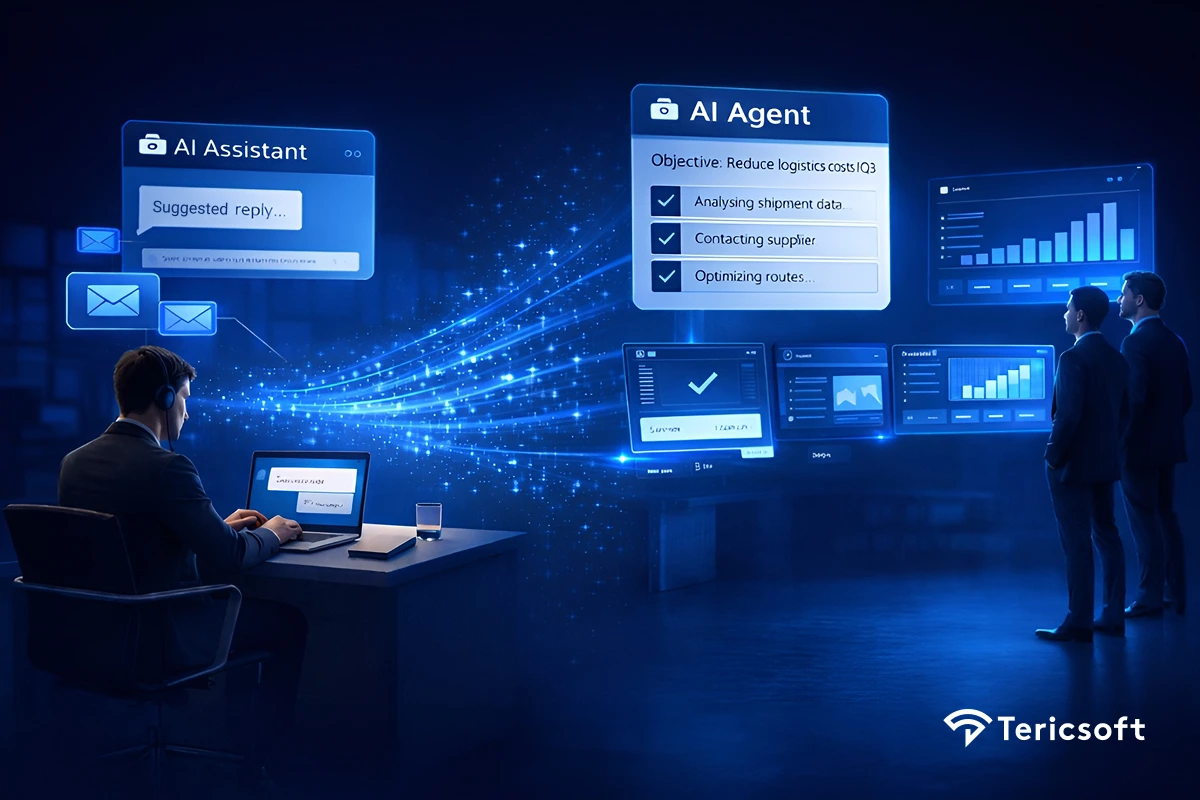
The next profound evolution is the transition from passive generative models to active, autonomous AI agents. These sophisticated agents will not simply draft emails or summarize reports. They will autonomously execute complex corporate workflows, negotiate with external vendor systems, and execute multi-step departmental decisions without requiring human oversight.
“The IT department of every company is going to be the HR department of AI agents in the future.”
— Jensen Huang, CEO of NVIDIA
Why Enterprise Platforms Will Define the Next Phase of AI Adoption
The era of the localized AI experiment is rapidly closing. The enterprise landscape is fracturing into two distinct categories. There are organizations that continue to waste capital on disconnected pilot programs that never reach production. Then, there are the visionary market leaders who are aggressively architecting scalable, governed, and fully integrated AI systems.
Organizations that build unified AI platforms, rather than isolated pilots, will definitively lead the next wave of global corporate innovation.
About Tericsoft
Tericsoft is a premier enterprise AI intelligence and platform partner dedicated to helping organizations move beyond isolated pilot programs to build scalable, production-ready AI systems. We specialize in transforming fragmented data ecosystems into unified, highly governed AI platforms that drive measurable business value. By bridging the critical gap between innovative machine learning models and core enterprise workflows, Tericsoft empowers technical and business leaders to operationalize artificial intelligence with absolute confidence, robust security, and definitive financial ROI.

AI pilots test isolated use cases, while enterprise AI platforms integrate data, models, and workflows to deliver scalable business impact.
Most AI pilots fail due to data silos, lack of integration with core systems, weak governance, and unclear business ROI alignment.
An enterprise AI platform is a unified system that operationalizes AI across business processes using integrated data, infrastructure, and workflows.
Organizations scale AI by building strong data foundations, adopting MLOps, embedding AI into workflows, and aligning initiatives with business goals.
Scaling AI improves operational efficiency, accelerates decision-making, reduces costs, and creates competitive advantage through intelligent systems.