Buy an off-the-shelf CMMS, build one in-house, or engineer a fleet maintenance software platform you own? The three-path decision, decided from inside a large fleet.
Fleet maintenance software is the system that keeps a fleet roadworthy and its maintenance spend under control, scheduling preventive service, raising and tracking work orders, managing parts inventory, recording inspections and compliance, and turning every repair into cost data per vehicle. The hard part is not choosing a product. It is choosing a path. There are three, and most operators only consider two.
This article is written from running maintenance operations, not from a feature grid. Tericsoft engineers the platform behind one of the world's larger electric deployments, a 3,000-plus vehicle fleet where component failures are caught before they strand a paying trip and every workshop hour is accounted for against the vehicle that earned it.
What a fleet CMMS actually does
A computerized maintenance management system, or CMMS, is the software category that centralizes maintenance work: preventive schedules, work orders, asset and repair history, parts and inventory, inspections, warranty and compliance records, and the cost analytics that sit on top. A fleet CMMS is that same discipline applied to vehicles, where the assets move, earn revenue, and fail on the road rather than on a plant floor.
It is worth separating two things buyers often merge. Fleet management software in the broad sense covers telematics, vehicle tracking, dispatch, and routing. CMMS software is the maintenance engine underneath it. Some platforms do both, many do one well and the other as a checkbox, and the difference decides whether a breakdown is predicted or merely reported after it happens.
The stakes are not small. In the American Transportation Research Institute's annual Operational Costs of Trucking analysis, repair and maintenance was one of the fastest-rising cost lines in 2025, up 8.6 percent, in a year that pushed the average cost to operate a truck to a record 2.34 dollars per mile. Maintenance is no longer a back-office ledger. It is one of the largest controllable numbers a fleet owns, which is exactly why the software decision matters.
Why buy versus build is the wrong question
Most operators frame the decision as a fork: buy an off-the-shelf product, or build one in-house. Framed that way, both answers are traps at scale. Off-the-shelf bends your operation to fit the product. Building in-house means standing up a permanent software team to maintain code that is not your business.
The real decision has three paths, not two. Buy a licensed product. Build it yourself from scratch. Or commission a custom platform that an engineering partner builds and you own outright. The third path is the one most buyers never price, and for a large fleet it is often the one that wins. The sections below take each honestly, including where each is the wrong choice.
Path one, buy: off-the-shelf fleet maintenance software
The buy path means licensing a ready product. The strongest fleet maintenance management software here is mature and quick to deploy: Fleetio, MaintainX, eMaint, Whip Around, and Fullbay for heavy-duty shops, alongside telematics-first platforms such as Samsara and Geotab that bundle a maintenance module onto tracking.
Right for small and mid-size fleets with standard preventive-maintenance workflows that want a working system in days, not quarters. If your maintenance looks like most fleets your size, a good product already models it, and buying is faster and cheaper than anything you could build.
The trade-offs compound with scale. Pricing is per vehicle per month, so the bill grows with the fleet forever and never amortizes. Your workflows have to fit the vendor's configuration limits, and your maintenance history lives in the vendor's data model, which turns deep integration to your parts supplier, ERP, or finance system into a negotiation rather than a given.
For a fleet running standard operations, those trade-offs are acceptable. For a fleet whose operating model is its edge, they are a ceiling.
Path two, build: your own system in-house
The build path means your own engineers writing the platform from the ground up. On paper it delivers exactly what you want and carries no per-vehicle fee.
Right for the rare operator with a permanent, funded software team and a maintenance model so distinctive it is a genuine competitive advantage worth owning end to end.
The trade-offs are why many build projects stall. You own the entire backlog forever, from the first work-order screen to every integration, security patch, and mobile update, and you own it with people you must hire and keep. Version one is the easy part.
The reality that a build is meant to replace, the spreadsheets, the whiteboard, and the one dispatcher who remembers which truck is due, tends to reappear when the internal project loses its sponsor. Building is not buying software once. It is committing to a product team indefinitely, and for most fleets maintenance is not the product.
Path three, custom: a CMMS you own
The custom path sits between the other two and is the one large operators most often overlook. An engineering partner builds a platform to your maintenance rules, deploys it in your cloud, and hands you the intellectual property. You get the fit of a build without standing up a permanent product organization, and you get ownership that a subscription never confers.
Right for operators past the point where per-vehicle pricing has become a serious line item and no product on the market fits how they actually run. A custom platform models your preventive logic, your mixed asset base, your parts and vendor network, and your cost structure directly. The first module is live in weeks, and the marginal cost for every vehicle added after that is close to zero. This is what runs the 3,000-plus vehicle deployment behind this article.
It is not the universal answer, and honesty matters here. Below a few hundred vehicles, or where standard workflows fit a standard product, custom is the expensive choice and we say so. The custom path earns its cost when the fleet is the business and the maintenance operation is too specific, too large, or too integrated to rent.
How to choose your fleet maintenance software
The path is not a matter of taste. Five variables decide it.
- Fleet size and growth curve. Per-vehicle pricing is cheap at fifty vehicles and punishing at fifteen hundred. Plot the subscription against your three-year growth, and the point where a licensed product costs more than an owned one is usually clearer than expected.
- Maintenance complexity. A single-make van fleet on standard service intervals is well served by a product. A mixed fleet of trucks, electric vehicles, and specialized equipment, each with its own preventive logic and telematics feed, strains what configuration alone can absorb.
- Data ownership and integration. Ask where your maintenance history lives and how deeply the system reaches into parts, warranty, telematics, and finance. If maintenance data has to join dispatch and cost data to be useful, shallow integration is a permanent tax.
- Total cost over the horizon that matters. A subscription is an operating expense that never ends. A custom build is a capital cost that converts into an asset with near-zero marginal cost per vehicle. The right comparison is lifetime, not month one.
- Whether maintenance is a cost center or a margin lever. If maintenance is overhead to be kept tidy, buy. If maintenance uptime is how you win contracts and protect margin, owning the system that runs it starts to look less like an expense and more like infrastructure.
Run those five against any product demo, and the sales conversation changes from feature comparison to fit.
What running maintenance for 3,000 vehicles taught us
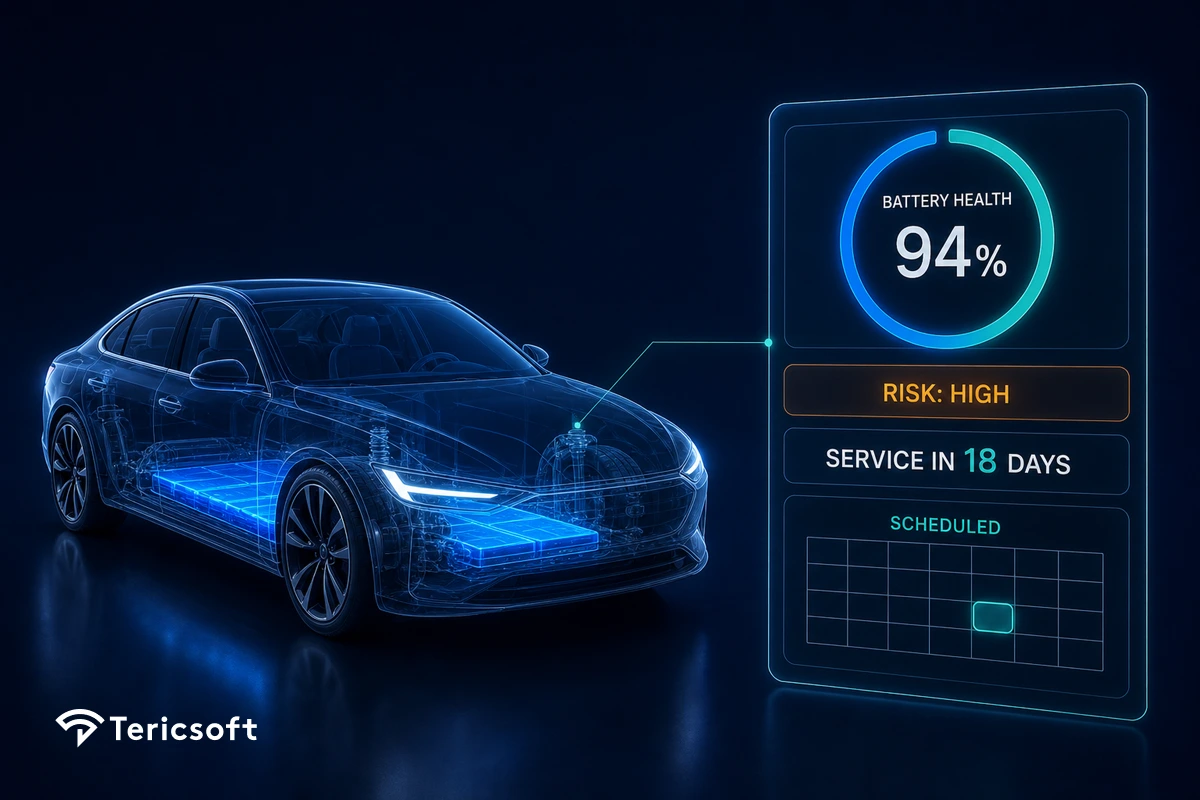
The numbers behind this article come from production. Across the fleet, component failures, including battery-signal anomalies, are flagged 2 to 3 weeks before breakdown and converted into workshop tickets automatically, which is the difference between a scheduled service and a stranded vehicle. That is predictive maintenance doing the one job a reactive fleet maintenance system cannot.
Three lessons repeated themselves. The first: preventive beats reactive by a wide margin. An unplanned roadside failure carries costs a scheduled service never does, the towing, the expedited parts, the overtime labor, and the revenue trip the vehicle was booked to run. None of those land on the repair invoice, which is why the reactive number is always understated.
The second: work orders have to generate and escalate themselves, so a missed service becomes an alert with an owner rather than a note nobody reads. The third: maintenance has to be a profit-and-loss line, with cost visible per vehicle, so the fleet knows which assets to keep, service harder, or retire. That last point is where a maintenance module stops being a truck maintenance software logbook and becomes an asset-management decision.
Key lessons
- The decision is three paths, not two. Buy, build, or commission a custom platform you own. Pricing only two of them is how large fleets end up overpaying for fit they never get.
- Per-vehicle pricing is fine until it is not. It is the cheapest path early and the most expensive at scale, so the choice is a function of size and growth, not preference.
- Preventive is the whole game. Software that predicts a failure and raises the work order earns its cost many times over against software that records the breakdown afterward.
- Own the data if maintenance is your margin. When uptime wins contracts, the system that runs maintenance is infrastructure worth owning, not a subscription to rent forever.
About Tericsoft
Tericsoft sits on the custom path, and only where it belongs. We do not sell a maintenance product with a price per vehicle, and we will tell an operator plainly when a product they can buy today is the better answer. What we build is the platform layer for fleets that have outgrown what they can license, the system that decides which vehicle is due, reads a failing component weeks before it fails, and ties every workshop hour back to the asset that earned it. Our vantage is operational, earned by running maintenance at a scale where a missed prediction is a stranded revenue trip. If your maintenance operation has outgrown the software built to log it, that is the problem we engineer for.

Software that runs fleet maintenance end to end: preventive scheduling, work orders, parts, inspections, and cost-per-vehicle analytics.
Fleet management software covers tracking, dispatch, and routing. A CMMS is the maintenance engine: work orders, schedules, and parts.
Off-the-shelf tools price per vehicle monthly, forever. A custom platform front-loads engineering and cuts per-vehicle cost toward zero.
Buy if standard workflows fit a small to mid-size fleet. Build rarely. Larger operators should also price a custom platform they own.
Yes, usually the off-the-shelf kind. It gives preventive scheduling, work orders, and cost tracking faster and cheaper than a custom build.